
We are BoB

We are BoB
Welcome, VHS Bad Schwartau e.V.!
Great, you are Best of Baltic, your score is
77
For 2026 the minimum score is
27
In 2027 the minimum score will be
34

Volkshochschule Bad Schwartau e.V.
Die VHS Bad Schwartau e.V. ist ein gemeinnütziger Bildungsverein und ein Ort des lebenslangen Lernens. Mit einem vielfältigen Kurs- und Veranstaltungsangebot in den Bereichen Gesellschaft, Kultur, Gesundheit, Sprachen, Beruf und digitale Bildung fördern wir Wissen, Begegnung und Teilhabe für Menschen jeden Alters. Als regional verwurzelte Bildungseinrichtung setzen wir uns für Nachhaltigkeit, gesellschaftliches Engagement und ein lebendiges Miteinander in unserer Stadt und der Ostseeregion ein. Durch unsere Teilnahme bei BoB möchten wir nachhaltiges Handeln sichtbar machen, Menschen vernetzen und gemeinsam positive Impulse für die Zukunft unserer Region setzen.
Energy
Energy-saving devices
2
(0) outdated devices, (1) with old energy-saving seal, (2) with up-to-date and (3) with the latest best value
(0) outdated devices, (1) with old energy-saving seal, (2) with up-to-date and (3) with the latest best value
It is always a consideration whether the further use of an older device does not require less energy or water than the production of a new, energy-efficient device. Therefore, the energy requirement along the entire product life cycle (from production to use to disposal) must be considered.
If you bring your own devices on travel e.g. by camper or boat you should consider them to be highly energy efficient
0.23
LED lamps
3
(0) for none at all, (1) for older energy-saving lamps, (2) for largely LED, (3) for complete LED lighting
(0) for none at all, (1) for older energy-saving lamps, (2) for largely LED, (3) for complete LED lighting
LED 'light bulbs' are now available for really all lamps, even with pleasantly warm light colors. If you come by camper or boat you should consider this.
0.23
Let the light burn unnecessarily
3
(0) happens constantly, (1) happens frequently, (2) happens rarely, (3) never happens
(0) happens constantly, (1) happens frequently, (2) happens rarely, (3) never happens
Modern lamps require little electricity, and yet it is worthwhile not to let them burn unnecessarily, for example when we are not in the room for a long time.
0.08
Renunciation of extreme power consumers
3
(0) use many, (1) use more than two, (2) use one, two (3) use none
(0) use many, (1) use more than two, (2) use one, two (3) use none
Apart from the fact that every device can have a high power consumption, a refrigerator is not regularly defrosted, the door seal is leaking, the washing machine is driven with too high temperatures and spin numbers, etc., there are still some unnecessary things that consume a lot of electricity:
Tumble dryer, sauna, dehumidifier, pond pumps, aquarium heaters, terrace heaters, etc.
On vacation you may consider not to use some of the energy wasting offers.
0.39
Housing, Buildings
Intelligent ventilation
3
(0) not at all, (1) less than 50%, (2) more than 50%, (3) 100% of the times in the heating season
(0) not at all, (1) less than 50%, (2) more than 50%, (3) 100% of the times in the heating season
Intelligent ventilation does not mean too late and not too long. It is too late when we get tired when the air is used up, get a headache and the humidity becomes too high. It is too long when the air has already been replaced and is cool, but we also ventilate the materials (walls, furniture) even longer.
Heat ultimately means that things or air vibrate. When the air is exchanged, but the objects and walls are still vibrating, the fresh air is quickly heated. Even if the walls get cold, mold can form on them and we need expensive heating energy to make everything vibrate again.
By the way, CO2 measuring devices help to ventilate in time and not for too long
0.23
Nutrition
Food from the region
2
(0) not at all, (1) less than 50%, (2) more than 50%, (3) 100% of food
(0) not at all, (1) less than 50%, (2) more than 50%, (3) 100% of food
Food from the region, from the weekly market and from the farm shop have not been transported far (there are of course also exceptions there) and strengthen the local economy.
However, there are also inefficient short transport routes when vehicles with little load drive to the points of sale. E-mobility and cargo bikes can help here.
Unfortunately, the regional is often also played out against the organic offer: regional, sprayed with pesticides food is not as good as regional organic food, and regional meat is not as good for the environment as the renunciation of meat.
0.23
Organic food
2
(0) not at all, (1) less than 50%, (2) more than 50%, (3) 100% of the products also available as organic
(0) not at all, (1) less than 50%, (2) more than 50%, (3) 100% of the products also available as organic
Organic is extremely important for biodiversity. We have the greatest species extinction since the extinction of the dinosaurs and the consequences are greater than those of climate change. Pesticides and mineral fertilizers endanger our future. In addition, soils from organic farming usually store more carbon and thus help against the climate catastrophe.
The counter-argument is often that the yields in organic farming are lower than in industrial agriculture and therefore more forests have to be cut down. This is true, for example, with cereals that are not unrestrictedly healthy. But if we eat less meat, waste less food and eat more healthy legumes, we have plenty of additional space available and can feed the entire world organically and even plant a little more forest.
Organic is more expensive. But on the one hand, many costs can be saved by less meat and on the other hand, it can be bought and cooked intelligently …. of course, it is also to be questioned whether there must be such a low livelihood at all - environmental policy is also social policy.
1.61
Organic from the region
2
(0) not at all, (1) less than 50%, (2) more than 50%, (3) 100% of the products also available as organic from the region
(0) not at all, (1) less than 50%, (2) more than 50%, (3) 100% of the products also available as organic from the region
Which is better - the organic apple from New Zealand or the sprayed apple from the region? Answer: both wrong. Organic food from the region means less transport and is therefore even better than organic food with wide transport.
2.00
Organic from the region seasonal
2
(0) not at all, (1) less than 50%, (2) more than 50%, (3) 100% of the seasonal products also available as organic
(0) not at all, (1) less than 50%, (2) more than 50%, (3) 100% of the seasonal products also available as organic
Seasonal organic products in addition to regional organic products also have less energy expenditure for storage.
In the respective months, other products are available seasonally, so that we can eat healthy and tasty all year round with little transport and storage effort with regard to a seasonal calendar.
2.16
Legumes
1
(0) not at all, (1) less than 50%, (2) more than 50%, (3) 100% of the otherwise mostly cereal products
(0) not at all, (1) less than 50%, (2) more than 50%, (3) 100% of the otherwise mostly cereal products
Legumes are not only an alternative source of vegetable proter to animal products, but also extremely important for world nutrition. They bind nitrogen from the air in the soil and can achieve just as high yields in organic farming as in industrial agriculture. So we have to cut down fewer forests.
In addition, legumes are healthier than cereals. Harari describes in Sapiens how we could probably get much older if we didn't eat so much cereal products.
After all, legumes are important for bees and biodiversity. Lupine, for example, also grows in northern Germany and can be used for meat substitutes, yogurt, coffee substitutes, ice cream or even noodles.
0.42
Tap water
2
(0) not at all, (1) less than 50%, (2) more than 50%, (3) 100% instead of purchased mineral water or soft drinks
(0) not at all, (1) less than 50%, (2) more than 50%, (3) 100% instead of purchased mineral water or soft drinks
Fortunately, tap water has long been a trend. There are drinking water dispensers in schools and the students have their drinking bottles with them, and managers also bring their drinking bottles to workshops. Many children do not even get used to the unhealthy sugar drinks.
Tap water is more strictly controlled than bottled drinks and saves a lot of energy and packaging.
Even with motorhomes or boats or in places with the smell of chlorine in the water, we can save a lot of money, energy and packaging through good and regularly exchanged filters.
1.30
Avoidance of food waste
2
(0) not at all, (1) less than 50%, (2) more than 50%, (3) I save or avoid 100% of the food to be thrown away
(0) not at all, (1) less than 50%, (2) more than 50%, (3) I save or avoid 100% of the food to be thrown away
Food is wasted from the field to the factories and transport routes to the throw away by us, the restaurants and the supermarkets. This ultimately means that more areas are needed for cultivation and thus forests are cut down and biodiversity is endangered with sprays and fertilizers.
We can shop more specifically, throw away goods not only because of the best before date, save food in the household (e.g. freeze bananas or make durable spreads and soups from leftover vegetables yourself), save specifically rescued food (e.g. too small or wrinkled goods) and also donate leftover food in many places, e.g. to the food banks.
0.83
Mobility
Renunciation of using own or renting a car/motorcycle
2
(0) none, (1) less than half the days, (2) at least half, (3) all the days
(0) none, (1) less than half the days, (2) at least half, (3) all the days
Not using your own car or renting one, although there would be a driver's license, means not only saving money, but also raw materials, parking space and a lot of energy.
In addition to flexibility and necessity in rural areas, car ownership means above all status, distinction and attribution (the infamous "phallus substitute with roaring sound). Alternatives are the bicycle, public transport and car sharing.
For young people, the renunciation also means solidarity with those who cannot afford mopeds - as difficult as it is.
Most households have never calculated the actual costs of their car ownership - from the purchase to taxes and insurance to energy and wear https://www.weforum.org/agenda/2024/05/one-less-car-how-this-country-is-encouraging-green-mobility/
2.33
Bicycle instead of car
2
(0) not at all, (1) less than 50%, (2) more than 50%, (3) always
(0) not at all, (1) less than 50%, (2) more than 50%, (3) always
No question - leaving the car and taking the bike is a proud feeling and healthy. If you don't want to exhaust yourself (for example, on the way to work), you can consider an e-bike. If you have a lot to transport, a cargo bike. Often we can also share a cargo bike with others. And if you shy away from bad weather, you will find great cycling clothing today, which completely refutes the argument.
0.55
Garbage
Separate garbage consistently
2
(0) not at all, (1) some, (2) mostly, (3) always, even on the go
(0) not at all, (1) some, (2) mostly, (3) always, even on the go
Consistently separating waste, including green waste, glass and paper, is not as self-evident as can be assumed. Many make little effort here and don't really know what belongs in which bin. But also special waste, such as batteries, incandescent lamps, electrical appliances, etc. must be disposed of properly.
0.65
Reusable
3
(0) not at all, (1) some, (2) mostly, (3) always
(0) not at all, (1) some, (2) mostly, (3) always
After unpacked and for drinks after the tap water, the best thing we can do is to buy our food in reusable containers. (By the way, there are also reusable shipping boxes for office supplies as well as some regional delivery services). Also ask whether the containers are transported empty throughout Germany, or whether North German beer flows into the empty bottle of Bavarian beer and vice versa. Next question, what energy does it cost to clean the containers. Composite packaging or cans that are easy to recycle are the better alternative in some studies. In such studies, it is necessary to look closely at what is being compared. Ultimately, it is important to close regional cycles.
Next question, whether the containers should be made of glass or plastic - glass is recycled more often, plastic is lighter and means less energy during transport.
0.81
Produce food yourself
2
(0) not at all, (1) sometimes, (2) much, (3) almost everything that is possible
(0) not at all, (1) sometimes, (2) much, (3) almost everything that is possible
We are used to buying safe and durable food comfortably in the supermarket. These are packed and since we separate the garbage, we hardly have a problem with it.
In fact, however, only a certain part of the garbage is recycled - much is burned or still exported.
But we can make a lot of food ourselves and buy the ingredients unpacked or with little packaging. It's a certain effort but it saves money and a lot of packaging. We can make bread, spreads, sauces, juices, jam, ..., everything that would otherwise be bought packed, ourselves. The fruit can come from the garden or from orchards - this promotes the demand for insect-friendly orchards and if we do all this together with others or at least exchange the yield with each other, we strengthen the community.
0.39
Social
Crafts from the region
2
(0) not at all, (1) sometimes, (2) mostly, (3) always
(0) not at all, (1) sometimes, (2) mostly, (3) always
This is about living and working in the region, about strengthening the community. The birdhouse from a social workshop or the PV system from the electrician on site (if he has further training).
1.06
Fair wages
3
(0) I don't care at all, (1) partially pay attention to it, (2) get involved, (3) always pay attention to it
(0) I don't care at all, (1) partially pay attention to it, (2) get involved, (3) always pay attention to it
Many people who earn above average can only do this because others earn below average. The gap between rich and poor is getting bigger and bigger. Consumers complain about cheap wages, but the price increase by 50 cents is rarely accepted.
What we deserve is not, as liberals or neoliberals like to think, just a question of diligence. It is the product (!) out of diligence, skill, and the right framework conditions. Anyone who knows many talented and hard-working people who are simply not lucky develops empathy and is willing to pay more, even if it is through tips.
In the US there is the sign "tip or die".
0.74
Volunteering
3
(0) not at all, (1) sometimes, (2) much, (3) maximum
(0) not at all, (1) sometimes, (2) much, (3) maximum
Volunteering, whether at the fire brigade, in the sports club or the help in the neighborhood, is enormously important for togetherness and society. Even on vacation you can engage in volunteering, e.g. some environmental projects.
0.74
-
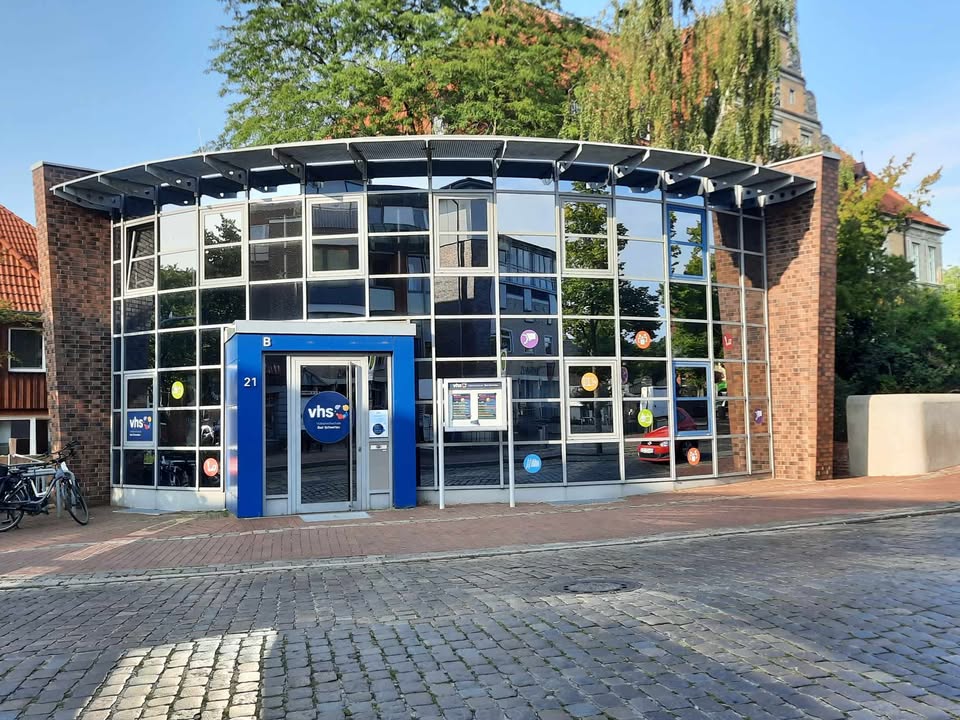
VHS Bad Schwartau e.V. Die Geschäftsstelle der VHS Bad Schwartau e.V. befindet sich zentral am Markt 21 in 23611 Bad Schwartau. In unserem vereinseigenen Kursraum finden regelmäßig Bildungs-, Gesundheits- und Kreativangebote für Menschen jeden Alters statt. Als gemeinnützige Bildungseinrichtung fördern wir lebenslanges Lernen, Begegnung und gesellschaftliche Teilhabe in unserer Region. Öffnungszeiten der Geschäftsstelle: Montag: 14:00 bis 19:00 Uhr Mittwoch: 09:00 bis 12:00 Uhr Donnerstag: 09:00 bis 12:00 Uhr Wir freuen uns über alle, die gemeinsam mit uns lernen, sich engagieren und unsere Region aktiv mitgestalten möchten. -

VHS Bad Schwartau Sprachkurse Die VHS Bad Schwartau bietet ein vielseitiges Sprachkursangebot mit über 30 Kursen für Anfängerinnen, Anfänger und Fortgeschrittene. Von den klassischen Fremdsprachen wie Englisch, Französisch, Spanisch und Italienisch bis hin zu Polnisch, Arabisch, Japanisch, Schwedisch und weiteren Sprachen ist für viele Interessen das passende Angebot dabei. Zahlreiche Schnupperkurse ermöglichen einen unkomplizierten Einstieg und laden dazu ein, neue Sprachen und Kulturen kennenzulernen. Ob für den Beruf, den Urlaub oder aus persönlichem Interesse: Unsere Sprachkurse fördern kommunikative Fähigkeiten und interkulturelle Begegnungen in einer angenehmen Lernatmosphäre.