
We are BoB

We are BoB

Welcome, NABU Wasservogelreservat Wallnau!
Great, you are Best of Baltic, your score is
73
For 2026 the minimum score is
27
In 2027 the minimum score will be
42
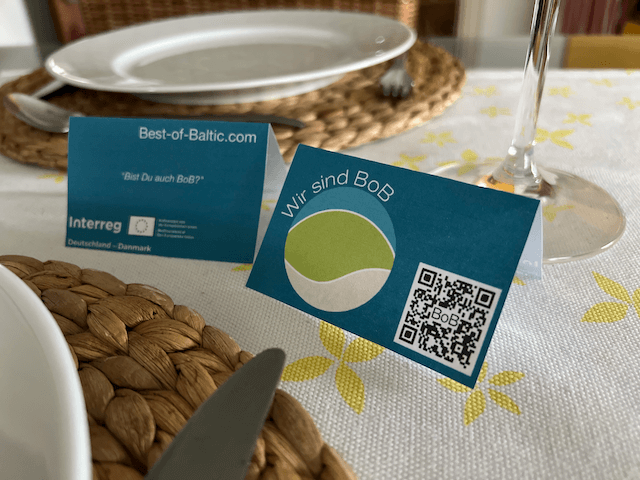
Das NABU Wasservogelreservat Wallnau an der Westküste Fehmarns ist ein ca. 300 Hektar großes Naturschutzgebiet und ein bedeutender Hotspot für den Vogelzug. Ausstellung und Besucherbereich laden Jung und Alt ein die Natur kennenzulernen.
Das Zentrum besteht schon seit 50 Jahren und ist das Größte vom NABU.
Energy
Switching to a ‘real’ green electricity provider
3
(0) no special tariff, (1) eco from the conventional provider, (2) eco from the local provider (3) with a pure green electricity provider
(0) no special tariff, (1) eco from the conventional provider, (2) eco from the local provider (3) with a pure green electricity provider
Your country has most likely real green electricity providers, as they purchase or implement the appropriate capacities of green electricity for each customer. The other electricity providers only offer an electricity mix. The share of green electricity is sold more expensively as an eco-tariff to some customers, while the other customers theoretically only receive the shares of gas, coal, etc.
http://www.imodeler.info/ro?key=CF8Gsu47BnYHLi5NHUWXKVA
0.44
Energy-saving devices
2
(0) outdated devices, (1) with old energy-saving seal, (2) with up-to-date and (3) with the latest best value
(0) outdated devices, (1) with old energy-saving seal, (2) with up-to-date and (3) with the latest best value
It is always a consideration whether the further use of an older device does not require less energy or water than the production of a new, energy-efficient device. Therefore, the energy requirement along the entire product life cycle (from production to use to disposal) must be considered. Companies need the competence to weigh up the right time for a new purchase of devices, but also the determination to then purchase the most sustainable and not only cheapest devices.
0.23
LED lamps
2
(0) none at all, (1) older energy-saving lamps, (2) argely LED, (3) complete LED lighting
(0) none at all, (1) older energy-saving lamps, (2) argely LED, (3) complete LED lighting
LED 'light bulbs' are now available for really all lamps, even with pleasantly warm light colors. Also, think about the lights outside - are they LED as well?
0.23
PV on suitable places
3
(0) not at all, (1) less than 50%, (2) more than 50%, (3) all suitable areas
(0) not at all, (1) less than 50%, (2) more than 50%, (3) all suitable areas
We have to use all suitable areas for photovoltaics (PV), as the variants on open spaces restrict nature and agriculture. A trend is PV on stilts (Agri-PV), so that it can still be gardened or cultivated underneath. But that costs building material. Photovoltaics has become amazingly inexpensive today thanks to cheap panels from China. Unfortunately, there is hardly any money to make from the feed into the power grid, currently about 8 cents per kWh in Germany. Therefore, PV should always be combined with its own electricity storage (own step, see below) so that as much electricity as possible is consumed by yourself. This then saves approx. 25 to 35 cents per kWh (depending on your tariff), which we would otherwise have to pay to the electricity provider. In this way, your own PV system, adapted to your own electricity consumption, pays off after just a few years. If you have a car, you should take into account its consumption (even if it is not yet an electric car). Then the savings are much bigger. The banks like to give loans for PV, quite often it is also being subsidized. In addition, there are also providers who take over the costs and virtually rent the roof area and offer discounted electricity in return. Such providers then form so-called virtual power plants with other houses and their batteries. For such a dependency, you should inform yourself well about what is best for you.
1.10
Energy storage
2
(0) not at all, (1) a small storage for one day, (2) a storage for more than one day, (3) a storage also for e-car charging or as a virtual power plant
(0) not at all, (1) a small storage for one day, (2) a storage for more than one day, (3) a storage also for e-car charging or as a virtual power plant
An electricity storage system primarily helps to maximize the yield of the PV system if the electricity is not fed into the grid for little money, but comes out of the battery in the evening and then allows the full electricity price to be saved.
Another advantage may be that some batteries work as an island system in the event of a power outage.
The already mentioned virtual power plants then access your battery from the outside and make the electricity available virtually in the neighborhood and compensate you for it. In addition, power grids are stabilized and even with little wind and no sun, we can consume renewable energies.
Note on lithium: Like many other raw materials, lithium is often problematic during mining. However, the life cycle assessment must take into account that we can recycle lithium for hundreds of years. In the basement, older lithium batteries from the automotive industry could also come to a second life later or, alternatively, sodium batteries that require more space.
0.66
Motion detector
1
(0) none, (1) less than half, (2) more than half, (3) everywhere
(0) none, (1) less than half, (2) more than half, (3) everywhere
Motion detectors make sense in all rooms including outdoor areas, where we potentially let the light burn for too long, for example in the hallway, basement, garage, etc. Of course, it is important that the light does not stay on for too long.
0.16
Avoidance of stand-by times
2
(0) not at all, (1) for some devices, (2) for most, (3) for all
(0) not at all, (1) for some devices, (2) for most, (3) for all
Standby power consumption is often reminded and extrapolated. For example, if a screen consumes 5 watts in standby, that is 120 watt hours (Wh) per day, i.e. about one eighth of a kilowatt hour (35 cents/kWh). Companies can quite easily calculate for themselves what savings potential all their computers, screens, beamers and even routers have if they do not use StandBy.
0.16
Let the light burn unnecessarily
2
(0) happens constantly, (1) happens frequently, (2) happens rarely, (3) never happens
(0) happens constantly, (1) happens frequently, (2) happens rarely, (3) never happens
Modern lamps require little electricity, and yet it is worthwhile not to let them burn unnecessarily, for example when we are not in the room for a long time. Corridors, toilet rooms, cellars often have the light burning unnecessarily. In some indoor and outdoor areas, companies also sometimes have the light on too long or too early.
0.08
Compensation of GHG emissions
2
(0) not at all, (1) only for air travel, (2) also for more and (3) for everything
(0) not at all, (1) only for air travel, (2) also for more and (3) for everything
The compensation of greenhouse gas emissions is very controversial. Someone flies, drives a car or organizes a barbecue and donates an amount for the associated greenhouse gas emissions to a service provider who promises projects for greenhouse gas saving / binding (e.g. via forest afforestation). Unfortunately, many providers prove to be fraudulent because they do not achieve the promised effect at all. So only reputable providers should be supported. In addition, the compensation should not be misunderstood as a free ticket. It is therefore important to avoid emissions as much as possible and only compensate for the rest (see also the point Donations).
0.42
Renunciation of extreme power consumers
1
(0) have many, (1) have more than two, (2) have one, two (3) have no
(0) have many, (1) have more than two, (2) have one, two (3) have no
Apart from the fact that every device can have a high power consumption, a refrigerator is not regularly defrosted, the door seal is leaking, the washing machine is driven with too high temperatures and spin numbers, etc., there are still some unnecessary things that consume a lot of electricity:
In the company, these can be exaggerated light installations, electric bollards, and much more.
0.39
Housing, Buildings
Insulation
1
(0) more 140kWh/m2a, (1) down to 70, (2) to 15, and (3) for less than 15 kWh/m2a
(0) more 140kWh/m2a, (1) down to 70, (2) to 15, and (3) for less than 15 kWh/m2a
Thermal insulation is extremely important. Investing here means saving energy and costs. The argument that building will then become too expensive must be clearly put into perspective. One way, of course, is to have to insulate smaller living spaces. The other to become generally more efficient when building. Then ecological building materials will also become affordable. Old houses that can no longer be sensibly insulated are perhaps worth so much more as a new building that financing is not a problem. (Note: the figures are for Germany)
1.17
Save water (devices)
2
(0) outdated devices, (1) with poor consumption value, (2) with recently current and (3) with the latest best value
(0) outdated devices, (1) with poor consumption value, (2) with recently current and (3) with the latest best value
Appliances such as washing machines and dishwashers must specify a value for water consumption when buying new. It is therefore worthwhile to compare water and energy consumption equally and also to research corresponding test reports..
0.35
Rainwater harvesting
3
(0) do not use rainwater, (1) small rainwater barrel, (2) cisterns for garden, (3) for garden and household
(0) do not use rainwater, (1) small rainwater barrel, (2) cisterns for garden, (3) for garden and household
We can use rainwater at least for garden irrigation in the case of unproblematic materials of the roof. With significantly more effort also for washing machine and toilet flushing. Even if it takes quite a long time economically before it's worth it, it's a good thing.
1.06
Natural building materials and paints
3
(0) not at all, (1) with less than half, (2) with more than half, (3) with everything
(0) not at all, (1) with less than half, (2) with more than half, (3) with everything
Building materials such as concrete, plaster, steel or even aluminum have a high ecological footprint and mean many greenhouse gases. The foamed insulation materials are also in the criticism. In addition, the negative consequences of conventional paints and adhesives are often unknown, which then lead to toxic exhaust gases in waste incineration plants due to ultimately ineffective filters. Natural building materials and colors are significantly more expensive, although the non-natural materials are often extremely expensive when it comes to disposal. So it is the good feeling, the better smell and the healthier building biology that make us do the right thing here.
1.37
Waiver of air conditioning
3
(0) not at all, (1) less than 50%, (2) more than 50%, (3) 100% of the rooms
(0) not at all, (1) less than 50%, (2) more than 50%, (3) 100% of the rooms
Air conditioning systems are also gaining in importance in temperate latitudes. Intelligent construction and ventilation and the use of thermal protection roller blinds can avoid these power guzzlers.
In warm regions, a corresponding education of the guests can take place. Often a fan is also useful.
0.39
Intelligent ventilation
2
(0) not at all, (1) less than 50%, (2) more than 50%, (3) 100% of the times in the heating season
(0) not at all, (1) less than 50%, (2) more than 50%, (3) 100% of the times in the heating season
Intelligent ventilation does not mean too late and not too long. It is too late when we get tired when the air is used up, get a headache and the humidity becomes too high. It is too long when the air has already been replaced and is cool, but we also ventilate the materials (walls, furniture) even longer.
Heat ultimately means that things or air vibrate. When the air is exchanged, but the objects and walls are still vibrating, the fresh air is quickly heated. Even if the walls get cold, mold can form on them and we need expensive heating energy to make everything vibrate again.
By the way, CO2 measuring devices help to ventilate in time and not for too long. However, these should not be a useless gadget, but perhaps used for practice one after the other in the rooms and gladly lent. A nice game is the competition, how good the sense of the people in the room is to ventilate in time and not too long.
Companies in particular have the potential to keep the doors in the entrance area not too far and not too long open.
0.23
Nutrition
Vegan days
2
(0) none per week, (1) 1-3, (2) 4-6, (3) 7 days a week
(0) none per week, (1) 1-3, (2) 4-6, (3) 7 days a week
Vegan means refraining from fish, meat, milk, cheese and other animal foods. Unthinkable for many people, on the one hand because of the taste, and on the other hand because they consider it unhealthy.
To the taste, it can be said: Among the extremely diverse vegan alternatives, something certainly tastes just as good or even better. We just have to try it - from vegan cheese to egg salad to burgers. Many celebrities and athletes are vegan. Vegan is booming.
Regarding health, it must be said: Our early ancestors ate healthier than we eat today. There was mixed food with only little meat and fish and also little grain and instead more legumes. If you eat a vegan diet, you have to pay attention to two nutrients: vitamin B12 and unsaturated omega 3 fatty acids. B12 can be bought for sucking (or as an additive in foods that are no longer called organic). Omega 3 fatty acids are available in linseed and algae oil. After a few months vegan, a blood test can show whether there are deficiency symptoms. As a rule, vegans eat healthier and are fitter than others.
What else does it bring: In addition to ethical reasons (keeping and killing animals), vegans help to prevent the deforestation of forests, because most areas in the world need the feed. In fact, we will not be able to feed the growing world population in the way we Germans. Vegans also prevent greenhouse gases from the methane emissions of cows, save enormous amounts of drinking water and prevent the pollution of soils, groundwater and waters.
4.44
Vegetarian days
3
(0) none per week, (1) 1-3, (2) 4-6, (3) 7 days a week
(0) none per week, (1) 1-3, (2) 4-6, (3) 7 days a week
Unlike the vegan diet, a vegetarian diet can also include milk, cheese or eggs. Vegetarian days are healthy, mean less animal husbandry and thus less consumption of land and water.
People in the industrialized world consume more than three times more animal products, which according to the EAT-Lancet Commission would be healthy for us and the planet. We don't have to become vegans or vegetarians right away, but maybe just flexitarians.
3.01
Food from the region
2
(0) not at all, (1) less than 50%, (2) more than 50%, (3) 100% of food
(0) not at all, (1) less than 50%, (2) more than 50%, (3) 100% of food
Food from the region, from the weekly market and from the farm shop have not been transported far (there are of course also exceptions there) and strengthen the local economy.
However, there are also inefficient short transport routes when vehicles with little load drive to the points of sale. E-mobility and cargo bikes can help here.
Unfortunately, the regional is often also played out against the organic offer: regional, sprayed with pesticides food is not as good as regional organic food, and regional meat is not as good for the environment as the renunciation of meat.
0.23
Organic food
1
(0) not at all, (1) less than 50%, (2) more than 50%, (3) 100% of the products also available as organic
(0) not at all, (1) less than 50%, (2) more than 50%, (3) 100% of the products also available as organic
Organic is extremely important for biodiversity. We have the greatest species extinction since the extinction of the dinosaurs and the consequences are greater than those of climate change. Pesticides and mineral fertilizers endanger our future. In addition, soils from organic farming usually store more carbon and thus help against the climate catastrophe. The counter-argument is often that the yields in organic farming are lower than in industrial agriculture and therefore more forests have to be cut down. This is true, for example, with cereals that are not unrestrictedly healthy. But if we eat less meat, waste less food and eat more healthy legumes, we have plenty of additional space available and can feed the entire world organically and even plant a little more forest.
Organic in the canteen or at the kiosk or at company events is of course more expensive - but if it is not exemplified somewhere, what do we expect in the private sector.
1.61
Organic from the region
1
(0) not at all, (1) less than 50%, (2) more than 50%, (3) 100% of the products also available as organic from the region
(0) not at all, (1) less than 50%, (2) more than 50%, (3) 100% of the products also available as organic from the region
Which is better - the organic apple from New Zealand or the sprayed apple from the region? Answer: both wrong. Organic food from the region means less transport and is therefore even better than organic food with wide transport.
Organic in the canteen or at the kiosk or at events is of course more expensive - but if it is not exemplified somewhere, what do we expect in the private sector. Sometimes a direct delivery from providers from the region is a way to save costs.
2.00
Organic from the region seasonal
1
(0) not at all, (1) less than 50%, (2) more than 50%, (3) 100% of the seasonal products also available as organic
(0) not at all, (1) less than 50%, (2) more than 50%, (3) 100% of the seasonal products also available as organic
Seasonal organic products in addition to regional organic products also have less energy expenditure for storage.
In the respective months, other products are available seasonally, so that we can eat healthy and tasty all year round with little transport and storage effort with regard to a seasonal calendar.
2.16
Legumes
1
(0) not at all, (1) less than 50%, (2) more than 50%, (3) 100% of the otherwise mostly cereal products
(0) not at all, (1) less than 50%, (2) more than 50%, (3) 100% of the otherwise mostly cereal products
Legumes are not only an alternative source of vegetable proter to animal products, but also extremely important for world nutrition. They bind nitrogen from the air in the soil and can achieve just as high yields in organic farming as in industrial agriculture. So we have to cut down fewer forests.
In addition, legumes are healthier than cereals. Harari describes in Sapiens how we could probably get much older if we didn't eat so much cereal products.
After all, legumes are important for bees and biodiversity. Lupine, for example, also grows in northern Germany and can be used for meat substitutes, yogurt, coffee substitutes, ice cream or even noodles.
0.42
Tap water
1
(0) not at all, (1) less than 50%, (2) more than 50%, (3) 100% instead of purchased mineral water or soft drinks
(0) not at all, (1) less than 50%, (2) more than 50%, (3) 100% instead of purchased mineral water or soft drinks
Fortunately, tap water has long been a trend. There are drinking water dispensers in schools and the students have their drinking bottles with them, and managers also bring their drinking bottles to workshops. Many children do not even get used to the unhealthy sugar drinks.
Tap water is more strictly controlled than bottled drinks and saves a lot of energy and packaging.
Companies can set up water dispensers - if necessary also work with filters, for example to remove chlorine odors.
1.30
Avoidance of food waste
3
(0) not at all, (1) less than 50%, (2) more than 50%, (3) I save or avoid 100% of the food to be thrown away
(0) not at all, (1) less than 50%, (2) more than 50%, (3) I save or avoid 100% of the food to be thrown away
Food is wasted from the field to the factories and transport routes to the throw away by us, the restaurants and the supermarkets. This ultimately means that more areas are needed for cultivation and thus forests are cut down and biodiversity is endangered with sprays and fertilizers.
We can shop more specifically, throw away goods not only because of the best before date, save food in the household (e.g. freeze bananas or make durable spreads and soups from leftover vegetables yourself), save specifically rescued food (e.g. too small or wrinkled goods) and also donate leftover food in many places, e.g. to the food banks.
Canteens and kiosks and also events can query the demand in advance and thus prevent food from being thrown away. A dish can also be deliberately offered the next day, which advertises the utilization of the leftovers from the previous day.
0.83
Mobility
Waiver of SUV or similar as a company car
2
(0) large SUV, bus, (1) extremely economical large-capacity vehicles, (2) middle class, (3) small and Compact car
(0) large SUV, bus, (1) extremely economical large-capacity vehicles, (2) middle class, (3) small and Compact car
A premium SUV can weigh well over 2.5 tons and consumes more than twice as economical vehicles. Van, buses are similar - but sometimes have an authorization, for example as then actually used 7-seaters or for regular transports. For rare transports, there should be rental cars nearby or trailers. There is a global trend towards SUVs. These unconsciously give us the feeling of robustness, of getting through. They reinforce the so-called attribution or distinction need. We think we are the great car.
0.42
Waiver of air travel
3
(0) more than one per year, (1) one per year, (2) one every few years, (3) none or less often than every 5 years
(0) more than one per year, (1) one per year, (2) one every few years, (3) none or less often than every 5 years
Flying is a great experience for most people like experiencing distant places. Flying short distances should rightly lead to 'flight shame' - some countries are planning to ban domestic flights completely.
The problem with flying is, on the one hand, that we travel a lot of kilometers, even if the energy requirement per kilometer and person is not so high. On the other hand, greenhouse gases are transported directly to the heights where they harm us.
So we should only use the plane for rare long-distance trips and then rather stay longer in the places. Many, on the other hand, fly several times a year, partly within Europe - some even to sustainability conferences or just to spontaneously escape the harsh weather in Germany. Unfortunately, flying is even subsidized and is often cheaper than train or car.
0.83
Bicycle shelters
3
(0) not at all, (1) for less than 50%, (2) for more than 50%, (3) all can store their bicycles
(0) not at all, (1) for less than 50%, (2) for more than 50%, (3) all can store their bicycles
What has recently been a successful model in some countries and cities is still a problem in Germany: to give cyclists priority over car traffic. The willingness to ride a bike, even in bad weather, is higher than ever. E-cargo bicycles make it possible to at least do without the second car. A company can do a lot from the bicycle shelter with charging possibility via the company bicycle.
0.41
Charging and repair stations bicycles
2
(0) not at all, (1) socket, (2) repair station, (3) both
(0) not at all, (1) socket, (2) repair station, (3) both
Especially older e-bikes have to be charged more often and in many families the bikes are simply not in order because no one has tools or even a functioning pump. The employer could also set up a repair station here.
0.05
Bicycle instead of car
1
(0) not at all, (1) less than 50%, (2) more than 50%, (3) always
(0) not at all, (1) less than 50%, (2) more than 50%, (3) always
No question - leaving the car and taking the bike is a proud feeling and healthy. If you don't want to exhaust yourself - for example on the way to work, you can consider an e-bike. If you have a lot to transport, a cargo bike. Often we can also share a cargo bike with others. And if you shy away from bad weather, you will find great cycling clothing today, which completely refutes the argument. Here, companies can promote their employees.
0.55
Carpooling
2
(0) always drive individually, (1) every now and then, (2) mostly, (3) basically, if possible, driving with others
(0) always drive individually, (1) every now and then, (2) mostly, (3) basically, if possible, driving with others
Many routes and times are not served by public transport. It is often worthwhile to drive in the car together with others. Even if the car is left at home and the times have to be adjusted, it can make us proud to do the right thing with a view to a better world.
In addition to carpooling in the circle of acquaintances, there are also portals that organize carpooling - often also for longer trips. As an employer, the municipalities can organize something for their employees here.
0.39
Garbage
Buy unpacked or refills
2
(0) never, (1) sometimes, (2) mostly, (3) always
(0) never, (1) sometimes, (2) mostly, (3) always
We are used to the fact that everything is packed and we don't care much about the packaging. For some foods, the packaging is more expensive in the production than the content. Paying attention to the packaging sends a signal to manufacturers and retailers.
For food, there are so-called unpackaged shops or at least the possibility of using deposit containers (own step) or cotton bags brought along for loose vegetables and fruit. To fill up the pantry or to cater for events, attention should therefore be paid to the packaging.
Office supplies can be delivered unpacked in deposit boxes (e.g. from Memo).
0.65
Separate garbage consistently
3
(0) not at all, (1) some, (2) mostly, (3) always, even on the go
(0) not at all, (1) some, (2) mostly, (3) always, even on the go
Consistently separating waste, including green waste, glass and paper, is not as self-evident as can be assumed. Many make little effort here and don't really know what belongs in which bin. The residual waste bin also costs the public sector a lot of money, while the recyclable and green waste bin are free of charge. But also special waste, such as batteries, incandescent lamps, electrical appliances, etc. must be disposed of properly.
0.65
Recycling-Paper
3
(0) never, (1) some, (2) mostly, (3) always
(0) never, (1) some, (2) mostly, (3) always
Non-recycled paper is often cheaper, but means cutting of forests, contamination of water during production and a high energy requirement.
Recycled paper for toilet paper, writing paper, packaging, envelopes, wrapping paper, etc. should be a matter of course today. But we have to pay attention to it and choose it.
Recycled paper is also snow-white, but it should then not be bleached with chlorine but oxygen.
1.23
Paperless office/media
1
(0) not at all, (1) some, (2) most, (3) all only digital.
(0) not at all, (1) some, (2) most, (3) all only digital.
Saving paper helps to protect forests - recycling paper also ultimately means more demand for fresh pulp from trees.
We don't even need to print many things in the first place, but can save them on devices that we already have. For internal processes but also for dialogue with customers, digital forms should continue to prevail.
0.61
Reusable in canteen and kiosk
3
(0) not at all, (1) some, (2) mostly, (3) always
(0) not at all, (1) some, (2) mostly, (3) always
After unpacked and for drinks after the tap water, the best thing we can do is to buy our food in reusable containers. (By the way, there are also reusable shipping boxes for office supplies as well as some regional delivery services). Also ask whether the containers are transported empty throughout Germany, or whether North German beer flows into the empty bottle of Bavarian beer and vice versa. Next question, what energy does it cost to clean the containers. Composite packaging or cans that are easy to recycle are the better alternative in some studies. In such studies, it is necessary to look closely at what is being compared. Ultimately, it is important to close regional cycles.
Next question, whether the containers should be made of glass or plastic - glass is recycled more often, plastic is lighter and means less energy during transport.
0.81
Flea markets, repair cafes, classified ads instead of throwing away
1
(0) not at all, (1) sometimes, (2) mostly, (3) always
(0) not at all, (1) sometimes, (2) mostly, (3) always
Many things are actually thrown away, although others could still do something with it. It is more convenient for us not to repair it than to have a stand at the flea market or to have to send it for little money. But the good feeling of doing the right thing motivates. A company can avoid garbage here - even if throwing it away probably meant little effort.
0.24
Garbage collection campaigns
3
(0) not at all, (1) some, (2) many, (3) systematically throughout the year
(0) not at all, (1) some, (2) many, (3) systematically throughout the year
Garbage collection as an event also for the clubs with subsequent meeting, possibly sponsored by the local economy, helps to get nature clean and to raise awareness. Companies can sponsor or participate as a team.
0.08
Land use
Avoidance of surface sealing
3
(0) no consideration, (1) some waiver, (2) a lot of waiver, (3) maximum possible waiver
(0) no consideration, (1) some waiver, (2) a lot of waiver, (3) maximum possible waiver
Surface sealing is a problem not only in growing civilizations, but also in Germany. We live on too much living space, are still building new streets and courtyard driveways and our terraces are also getting bigger and bigger.
To specifically dispense with area, to build in height, water-permeable paving, green roofs (own point) and, weighing up all the advantages and disadvantages, to expand one's own house to the height in order to enable more people to live on the same sealed area, are valuable steps. By the way, an English lawn is ecologically not very valuable, for example, compared to a flower or clover meadow or a vegetable garden.
Companies can systematically look at which areas do not have to be sealed and perhaps can be provided with flower meadows.
0.83
Renaturation
3
(0) not at all, (1) some, (2) most, (3) all
(0) not at all, (1) some, (2) most, (3) all
In many places, moors, streams, etc. have been lost with the settlement and intensification of agriculture. Renaturalizing this often means an enormous gain for biodiversity, climate and also flood protection.
1.04
Biochar-coal for CO2 storage in the soil
2
(0) not at all, (1) some, (2) most, (3) all
(0) not at all, (1) some, (2) most, (3) all
By the way, the biochar can also be made quite practically with pyrolysis cookers from your own tree pruning from the garden - a nice alternative to grilling.
Problem here - with some pyrolysis cookers, the combustion process is not optimal and there are also pollutants for the soil.
A search for suitable pyrolysis cookers and compliance with the operating instructions leads to good biochar and is a pleasure. https://chantico-terrassenofen.de/chantico-biokohle-ist-die-beste-00-mg-pak/
0.22
Insect hotels, birdhouses, field mouse boxes, ...
2
(0) not at all, (1) some, (2) many, (3) maximum
(0) not at all, (1) some, (2) many, (3) maximum
Insect hotels or just old, higher tree stumps and dead wood on the ground, nesting boxes and, if useful, bat boxes are great ways to maximize biodiversity in your own environment. School classes can also participate here.
0.48
Insect-friendly flowering plants
2
(0) not at all, (1) in some places, (2) in many places, (3) in all places and possibly also on the go
(0) not at all, (1) in some places, (2) in many places, (3) in all places and possibly also on the go
It is hard to believe that the future of our diet depends on the use of pesticides and their influence on insects that have to pollinate our plants. Many pollinators are threatened with extinction and in addition to the purchase of organic, we can offer these insects flowers on our areas. In fact, some plants are neither bee-nor bird-friendly. On the other hand, fruit trees and most vegetables are already great opportunities to promote bees, bumblebees, etc. At the flower meadows there are one- and multi-year-olds.
0.64
Organic vegetable and fruit cultivation
3
(0) not at all, (1) some, (2) much, (3) maximum
(0) not at all, (1) some, (2) much, (3) maximum
Do we harm the regional organic farmers when crops, such as orchards, grow on public land?
No, because hardly anyone will be able to take care of it themselves. Rather, the main problem is the use of land. English lawns, ornamental plants, weed destruction, etc. harm the soil and biodiversity. Instead, nature-friendly crops are needed.
If a company shies away from the maintenance effort, permaculture and the cultivation of perennial plants may make sense. Also, the cooperation with beekeepers and school classes, the possibility of public gardening and sponsorships are great measures for a better world.
Urban gardening is also popular when companies have raised beds on their roofs and offer employees something to relax and have a bite.
1.56
Green roof
3
(0) not at all, (1) partially, (2) predominantly, (3) on all suitable surfaces
(0) not at all, (1) partially, (2) predominantly, (3) on all suitable surfaces
Green roofs, at least for garages and shelters, are a good attempt to do something against the surface sealing and the extinction of species. If the areas are oriented towards the sun - to the east, west or south - it can of course also be occupied with PV modules. For flat roofs, the PV modules can be set up and then still grow a little under them. There are also bifacial solar modules that allow light to pass through or also generate energy with the scattered light from the back (although of course a green area does not illuminate the backs as much as a bright tin roof).
0.08
Planting rare species
3
(0) not at all, (1) some, (2) many, (3) always when there are alternatives
(0) not at all, (1) some, (2) many, (3) always when there are alternatives
Rare and exotic (not invasive) species often have less yields than our standard products (e.g. apples), but they are usually particularly tasty, encourage conversations with others and help to increase biodiversity. Farms should choose robust plants that can cope even with extreme weather. Diversity ensures resilience against specific diseases.
0.96
Animal/insect friendly outdoor lighting
2
(0) not at all, (1) isolated, (2) in many places, (3) everywhere
(0) not at all, (1) isolated, (2) in many places, (3) everywhere
The awareness of nature-friendly outdoor lighting has increased significantly, there are already so-called star cities that do not want to "pollute" the view of the night sky with light. The street lamps are about whether they shine into the trees or on the street and with which light color they attract how many insects/moths. But we can also do a lot wrong in our gardens, with too bright light, motion detectors that disturb hedgehogs, or those cheap solar lamps that are already hazardous waste with the purchase and do not let the garden get dark in the first place.
0.16
Renunciation of road salt
3
(0) not at all, (1) less than 50%, (2) more than 50%, (3) always
(0) not at all, (1) less than 50%, (2) more than 50%, (3) always
Road salt is convenient and safe, but a considerable burden for pets, the trees and the surface water. Replacing this with split means more effort, but it's worth it.
0.24
Waiver of weed killers
3
(0) not at all, (1) less than 50%, (2) more than 50%, (3) always
(0) not at all, (1) less than 50%, (2) more than 50%, (3) always
Sidewalks can be kept mechanically or by flames weed-free or the herb can also grow sometimes. The beds can be kept mechanically herb-free or laid out from the outset in such a way that herb does not matter. Pesticides are one of the main causes of species extinction and water pollution.
0.24
Finance, Insurance
Real green bank
1
(0) not at all, (1) regional bank, (2) partly real green bank, (3) complete change to green bank
(0) not at all, (1) regional bank, (2) partly real green bank, (3) complete change to green bank
Basically, there are three types of banks - the inexpensive online banks with great conditions, the local savings banks and cooperative banks or branches of the major banks, and a very few real eco-banks (GLS Bank, Triodos, ....). The savings interest rates of eco-banks are quite decent, while the short-term interest rates and fees are less attractive. But all sorts of things are not financed without regard to ethical and ecological standards. Even the local banks focus on the maximum return here.
Globally, Green Finance already plays a huge role. Investors pay attention to ethical standards and thus put pressure on the industry to adhere to standards or even become a pioneer.
3.20
Green investment
3
(0) not at all, (1) little, (2) mostly, (3) exclusively
(0) not at all, (1) little, (2) mostly, (3) exclusively
Actually, it is logical that green investments have to yield the most return - but to be fair, it must be said that at least in the short term, bad fluctuations also happen here. With the Ukraine attack by Russia, money was withdrawn from renewable energies and relocated to the old oil industry and weapons production. Due to homemade problems, e-mobility does not get going and suddenly the prices of lithium suppliers are swaying. (not every lithium supplier is sustainable)
On the other hand, investments in wind and solar parks or crowd financing of other sustainable projects, such as energy renovation, are solid.
Companies can also take sustainable criteria into account when investing as far as permissible or also accompany citizen energy projects.
3.20
Sustainable insurance
2
(0) not at all, (1) a few, (2) most, (3) exclusively
(0) not at all, (1) a few, (2) most, (3) exclusively
Sustainable insurance is still a young development and yet there are now some.
1.60
Social
Crafts from the region
3
(0) not at all, (1) sometimes, (2) mostly, (3) always
(0) not at all, (1) sometimes, (2) mostly, (3) always
This is about living and working in the region, about strengthening the community. The birdhouse from a social workshop or the PV system from the electrician on site (if he has further training). The award criteria of the municipalities must of course be legally secure.
If the work is good, a discreet advertising sign can also draw attention to the craft business in return.
1.06
Fair trade products
1
(0) not at all, (1) some, (2) mostly, (3) always, even on the go
(0) not at all, (1) some, (2) mostly, (3) always, even on the go
At Fair-Trade, we usually think of the label of the same name - which is no longer in disrepute. But there are also other labels - some rather greenwashing, some quite trying to do better. Fair is not always the same as organic and organic is not always fair (but some labels combine both).
The importance is immense: fair working conditions in the world ensure less migration, more climate protection and a more peaceful world.
Extremely remarkable is the background of chocolate and the connection between child slavery (!) And the common products from Nutella to children's chocolate to the Mars bar: https://edition.cnn.com/world/freedom-project
Companies and events can therefore be pioneers for a better world themselves here in the food or in the work clothes or the hand-sewn football.
3.20
Fair wages
2
(0) I don't care at all, (1) partially pay attention to it, (2) get involved, (3) always pay attention to it
(0) I don't care at all, (1) partially pay attention to it, (2) get involved, (3) always pay attention to it
Many people who earn above average can only do this because others earn below average. The gap between rich and poor is getting bigger and bigger. Consumers complain about cheap wages, but the price increase by 50 cents is rarely accepted.
What we deserve is not, as liberals or neoliberals like to think, just a question of diligence. It is the product (!) Out of diligence, skill and the right framework conditions. Anyone who knows many talented and hard-working people who are simply not lucky develops empathy and is willing to pay more, even if it is through tips.
Companies can set an example in the case of remuneration, in particular for less well-paid activities within the scope of their possibilities.
0.74
Volunteering
3
(0) not at all, (1) sometimes, (2) much, (3) maximum
(0) not at all, (1) sometimes, (2) much, (3) maximum
Volunteering, whether at the fire brigade, in the sports club or the help in the neighborhood, is enormously important for togetherness and society. Companies can help here to honor volunteering and accompany it through donations.
0.74
Citizens' meeting (clubs, fire brigade, squares)
3
(0) not at all, (1) promote some, (2) promote a lot, (3) maximum each measured by what is basically conceivable.
(0) not at all, (1) promote some, (2) promote a lot, (3) maximum each measured by what is basically conceivable.
Support of clubs, squares and halls for the gathering of citizens
0.12
Partnerships with developing countries
3
(0) not at all, (1) support some, (2) promote them a lot, (3) maximum each measured by what is basically conceivable.
(0) not at all, (1) support some, (2) promote them a lot, (3) maximum each measured by what is basically conceivable.
Bringing people together in the world is more important than ever in times of globalization. Companies can also get involved here beyond the direct economic interest.
1.37
Nature experience opportunities
3
(0) not at all, (1) promote some, (2) promote a lot, (3) maximum each measured by what is basically conceivable.
(0) not at all, (1) promote some, (2) promote a lot, (3) maximum each measured by what is basically conceivable.
Educational trails, information boards, exhibitions, excursions, etc., if necessary also together with schools and nature conservation organizations.
0.07
Clothes
Organic cotton/ linen/ hemp/ wood fiber/ certified virgin wool
1
(0) not at all, (1) some, (2) many things, (3) everything
(0) not at all, (1) some, (2) many things, (3) everything
Globally, conventional cotton is an environmental problem due to the use of sprays and the high water consumption. In addition, the textile factories poison entire rivers and exploit people during conventional dyeing.
In addition to ecological cotton, there are other natural fibers with sometimes much less damage to the environment.
In the case of virgin wool, attention must be paid to the certification, which excludes animal suffering.
By the way, there is now also outdoor clothing made of densely woven organic cotton as an alternative to the plastic fibers. Plastic fibers always allow microplastics to enter the wastewater during washing and microplastics in the environment may lead to multi-resistant super germs - a long history.
With the points for clothing, if you do not buy conventional cotton, but sometimes choose recycled and sometimes organic cotton, you can give a full 3 points for both.
By the way, organic is also possible with curtains, tablecloths and bed linen!!!
1.69
Recycled cotton
1
(0) not at all, (1) some, (2) many things, (3) basically
(0) not at all, (1) some, (2) many things, (3) basically
This is about workwear or, for example, in the tourism sector clothing with advertising. Even large, conventional clothing stores sometimes take back old clothes and promise to produce new yarns from them. Often the problem is the quality of short-lived clothing, which is then difficult to recycle and yet ends up in the waste incineration plant or on the dump in developing countries.
1.61
Recycled synthetic fibers without toxic impregnation
2
(0) not at all, (1) some, (2) many things, (3) basically
(0) not at all, (1) some, (2) many things, (3) basically
This is about workwear or, for example, in the tourism sector clothing with advertising. In particular, the manufacturers of outdoor clothing now use recycled PET bottles for their yarns and they also do without the worst chemicals, such as PFCs. Nevertheless, the question is always whether we have to wear clothes that are designed for the Himalayas in everyday life. Because synthetic fibers also release microplastics from the plastic fleece sweater to the wastewater. Some use a washing bag that is supposed to collect these plastic fiber remains.
0.57
Renunciation of leather
2
(0) not at all, (1) sometimes, (2) often, (3) basically
(0) not at all, (1) sometimes, (2) often, (3) basically
This is about workwear or, for example, in the tourism sector clothing with advertising. Vegan shoes and belts are no longer distinguishable from their leather variants. And who pays attention to the fact that the tanning processes do not allow heavy metals to enter the environment or that the leather is certified accordingly?
We should be careful with some plastics, such as PVC with plasticizers, which are also not good for the environment.
0.59
Body Care
Natural cosmetics
1
(0) not at all, (1) in many places, (2) mostly, (3) basically
(0) not at all, (1) in many places, (2) mostly, (3) basically
All major drugstore discounters now have natural cosmetics in all areas - from deodont to lipstick to sunscreen (although sustainable sunscreens are a real challenge, as tests prove again and again).
On the one hand, natural cosmetics are usually healthier, and on the other hand, no non-degradable substances enter the environment. In the tourism sector, it is accordingly about the soaps in the toilet facilities and on the rooms including shower gels.
0.44
Cleaning Products
Organic cleaning agents
2
(0) not at all, (1) sometimes, (2) often, (3) basically
(0) not at all, (1) sometimes, (2) often, (3) basically
Organic cleaning agents can be found in all supermarkets and drugstores. An essential feature is biodegradability and, of course, the vegetable raw materials as an alternative to petroleum-based raw materials.
Even if conventional cleaning agents are classified as safe, organic cleaning agents are certainly safer and are less harmful to health and also burden the sewage treatment plants less.
0.44
Other Consumption
Used or long-lived furniture
2
(0) not at all, (1) sometimes, (2) often, (3) basically
(0) not at all, (1) sometimes, (2) often, (3) basically
Many furniture cannot stand being moved or even disassembled and reassembled. They are primarily cheap and the business model is that after a few years we want to buy new furniture. Looking at how valuable the furniture is and then being able to repair it takes us a whole lot further on the way to a better world. It is also amazing what good pieces there are on the used market.
1.30
Ecological furniture
2
(0) not at all, (1) sometimes, (2) often, (3) basically
(0) not at all, (1) sometimes, (2) often, (3) basically
Ecological furniture is made of natural materials without questionable chemical additives or varnishes. They are usually very expensive, but also last many decades and can usually be easily repaired and renovated.
0.26
Waiver of leaf vacuum cleaners and blowers
3
(0) not at all, (1) sometimes, (2) often, (3) basically
(0) not at all, (1) sometimes, (2) often, (3) basically
Leaf vacuums and blowsers are even worse than the idea of mowing small lawns with a large lawn mowing tractor at all and then for hours. Boys with toys. The leaf vacuums and blowers emit noise and ultrafine particles and harm the soil organisms more than rakes or brooms.
0.11
Green IT
1
(0) not at all, (1) recyclable, (2) fair, (3) used devices
(0) not at all, (1) recyclable, (2) fair, (3) used devices
Green IT starts with the devices and goes on to the power consumption from streaming to the use of IT to increase efficiency. The devices are about the use of used or refurbished devices, repairable devices, the recycling of materials and the minimization of questionable raw materials.
0.55
Used, long-used devices
3
(0) not at all, (1) sometimes, (2) often, (3) basically
(0) not at all, (1) sometimes, (2) often, (3) basically
Many devices from vacuum cleaners to cordless screwdrivers to TVs are amazingly inexpensive today. Relying on valuable devices that last a long time, or even buying used devices, helps to save raw materials and energy.
1.30
Repairing instead of buying new
3
(0) not at all, (1) sometimes, (2) often, (3) basically
(0) not at all, (1) sometimes, (2) often, (3) basically
Unfortunately, many devices can no longer be repaired at all, for example if the control unit breaks down from the washing machine and costs more than a new washing machine. And yet there are workshops that also repair mobile phones, washing machines, lawn mowers, etc. - and even if it is as expensive as a new device, it is the good feeling of having done something for a better world again.
0.65
Non-sustainable company parties / excursions
3
(0) have which, (1) very rare, (2) make these environmentally friendly, (3) have no,
(0) have which, (1) very rare, (2) make these environmentally friendly, (3) have no,
This does not refer to the skater track or the artificial turf sports field, but motorsport, skiing on artificially snowy slopes, kiting in bird protection areas, sailboats with biocides on the underwater ship, golfing with high use of water and pesticides, quad rides into nature, skydiving, etc. Of course, these hobbies are fun, which is why it is rewarded if we actively choose the more environmentally friendly alternatives here and thus achieve a rethink with others.
1.00
Production
Fair wages and working conditions supply chain
3
(0) not at all, (1) sometimes, (2) often, (3) generally complied with
(0) not at all, (1) sometimes, (2) often, (3) generally complied with
Transparency in the supply chain should not only strive for the larger companies committed to doing so. This also includes the knowledge of the working conditions under which people work. Child labor and slavery are still common and inhuman working conditions and hunger wages are often at the beginning of the supply chain in the mines and factories abroad. Here, a company can exert pressure and remunerate better accordingly.
0.00
Environmental impact of the supply chain
3
(0) not at all, (1) partially, (2) largely, (3) basically according to the current possibilities minimal
(0) not at all, (1) partially, (2) largely, (3) basically according to the current possibilities minimal
Especially at the beginning of the supply chains, there is a lot of environmental pollution but also land robbery (expropriation such as clearing). Paying attention to standards here makes raw materials and precursors expensive. But transparency in complying with and exceeding standards can make a decisive contribution to the better marketing of end products today.
0.00
Heat recovery process heat
1
(0) not at all, (1) partially, (2) largely, (3) maximum
(0) not at all, (1) partially, (2) largely, (3) maximum
Heat is generated in many production processes. This should be used - at least for your own rooms and the need for hot water, or even for district heating.
0.00
Moderate office/warehouse/production area
2
(0) a lot of unused area, (1) a lot of space, (2) little space (3) occupied, possibly shared spaces
(0) a lot of unused area, (1) a lot of space, (2) little space (3) occupied, possibly shared spaces
The area we need for rooms and outdoor places means the area that is sealed, the building material that is needed, and most often the room that needs to be heated. If we use the rooms here, possibly sublet them or share them with others (e.g. co-working spaces), we take big steps towards sustainability. Especially in the course of home office, the shrinking of company space is not a step backwards, but a progress.
0.00