We are BoB

We are BoB

Welcome, Andrea Stehr!
Great, you are Best of Baltic, your score is
60
For 2026 the minimum score is
27
In 2027 the minimum score will be
42

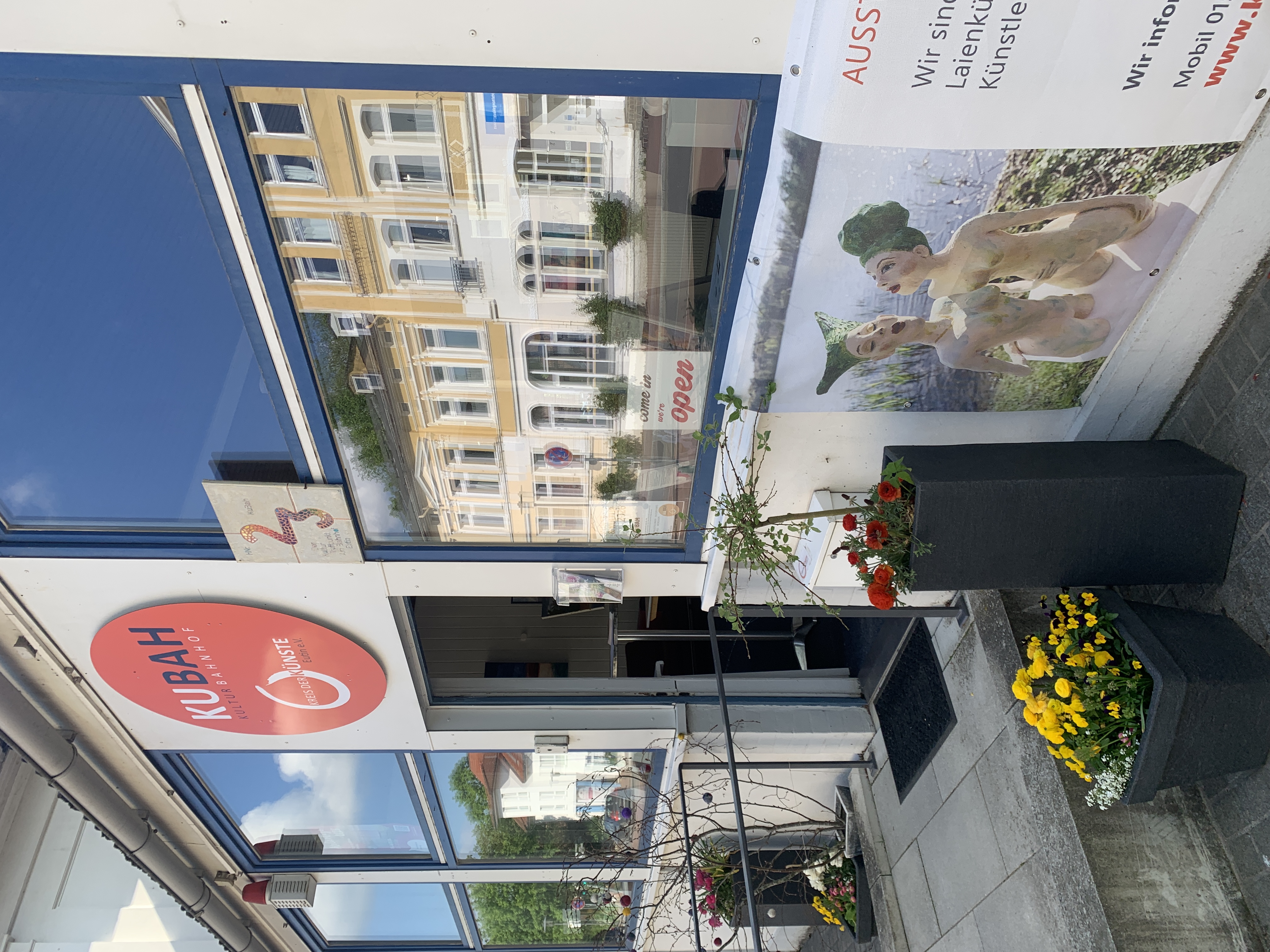
Der KREIS DER KÜNSTE IN EUTIN hat mittlerweile 71 Mitglieder. Wir sind meist Hobby-Künstler aber auch professionelle Kunstschaffende aus allen Sparten, Malerei, Tanz, Lyrik, Musik.
Seit 2026 betreiben wir einen Kulturbahnhof in Eutin, unseren KuBah. Der rechte Flügel des Eutiner Bahnhofs wurde uns von der Stadt zur Verfügung gestellt. Es war ein abgewirtschafteter Raum, den wir mit wenigen finanziellen Mitteln aber großem ehrenamtlichen Engagement renoviert haben. Nun finden dort pausenlos Ausstellungen statt. Mindestens 2-mal pro Monat haben wir Abendveranstaltungen. Viele Künstler kommen auf uns zu, um im KuBah ihr Können darzubieten. Wir sind in kürzester Zeit zu einem kulturellen Magneten geworden und eine Bereicherung für unsere Stadt.
Wir kümmern uns auch um die Sauberkeit rund um den Bahnhof und haben bereits eine Litfaßsäule in Eutin auf unsere Kosten gestalten lassen. Eine zweite ist in Arbeit.
Energy
Energy-saving devices
3
(0) outdated devices, (1) with old energy-saving seal, (2) with up-to-date and (3) with the latest best value
(0) outdated devices, (1) with old energy-saving seal, (2) with up-to-date and (3) with the latest best value
It is always a consideration whether the further use of an older device does not require less energy or water than the production of a new, energy-efficient device. Therefore, the energy requirement along the entire product life cycle (from production to use to disposal) must be considered. Companies need the competence to weigh up the right time for a new purchase of devices, but also the determination to then purchase the most sustainable and not only cheapest devices.
0.23
LED lamps
3
(0) none at all, (1) older energy-saving lamps, (2) argely LED, (3) complete LED lighting
(0) none at all, (1) older energy-saving lamps, (2) argely LED, (3) complete LED lighting
LED 'light bulbs' are now available for really all lamps, even with pleasantly warm light colors. Also, think about the lights outside - are they LED as well?
0.23
Avoidance of stand-by times
3
(0) not at all, (1) for some devices, (2) for most, (3) for all
(0) not at all, (1) for some devices, (2) for most, (3) for all
Standby power consumption is often reminded and extrapolated. For example, if a screen consumes 5 watts in standby, that is 120 watt hours (Wh) per day, i.e. about one eighth of a kilowatt hour (35 cents/kWh). Companies can quite easily calculate for themselves what savings potential all their computers, screens, beamers and even routers have if they do not use StandBy.
0.16
Renunciation of extreme power consumers
2
(0) have many, (1) have more than two, (2) have one, two (3) have no
(0) have many, (1) have more than two, (2) have one, two (3) have no
Apart from the fact that every device can have a high power consumption, a refrigerator is not regularly defrosted, the door seal is leaking, the washing machine is driven with too high temperatures and spin numbers, etc., there are still some unnecessary things that consume a lot of electricity:
In the company, these can be exaggerated light installations, electric bollards, and much more.
0.39
Nutrition
Vegan days
0
(0) none per week, (1) 1-3, (2) 4-6, (3) 7 days a week
(0) none per week, (1) 1-3, (2) 4-6, (3) 7 days a week
Vegan means refraining from fish, meat, milk, cheese and other animal foods. Unthinkable for many people, on the one hand because of the taste, and on the other hand because they consider it unhealthy.
To the taste, it can be said: Among the extremely diverse vegan alternatives, something certainly tastes just as good or even better. We just have to try it - from vegan cheese to egg salad to burgers. Many celebrities and athletes are vegan. Vegan is booming.
Regarding health, it must be said: Our early ancestors ate healthier than we eat today. There was mixed food with only little meat and fish and also little grain and instead more legumes. If you eat a vegan diet, you have to pay attention to two nutrients: vitamin B12 and unsaturated omega 3 fatty acids. B12 can be bought for sucking (or as an additive in foods that are no longer called organic). Omega 3 fatty acids are available in linseed and algae oil. After a few months vegan, a blood test can show whether there are deficiency symptoms. As a rule, vegans eat healthier and are fitter than others.
What else does it bring: In addition to ethical reasons (keeping and killing animals), vegans help to prevent the deforestation of forests, because most areas in the world need the feed. In fact, we will not be able to feed the growing world population in the way we Germans. Vegans also prevent greenhouse gases from the methane emissions of cows, save enormous amounts of drinking water and prevent the pollution of soils, groundwater and waters.
4.44
Vegetarian days
0
(0) none per week, (1) 1-3, (2) 4-6, (3) 7 days a week
(0) none per week, (1) 1-3, (2) 4-6, (3) 7 days a week
Unlike the vegan diet, a vegetarian diet can also include milk, cheese or eggs. Vegetarian days are healthy, mean less animal husbandry and thus less consumption of land and water.
People in the industrialized world consume more than three times more animal products, which according to the EAT-Lancet Commission would be healthy for us and the planet. We don't have to become vegans or vegetarians right away, but maybe just flexitarians.
3.01
Food from the region
2
(0) not at all, (1) less than 50%, (2) more than 50%, (3) 100% of food
(0) not at all, (1) less than 50%, (2) more than 50%, (3) 100% of food
Food from the region, from the weekly market and from the farm shop have not been transported far (there are of course also exceptions there) and strengthen the local economy.
However, there are also inefficient short transport routes when vehicles with little load drive to the points of sale. E-mobility and cargo bikes can help here.
Unfortunately, the regional is often also played out against the organic offer: regional, sprayed with pesticides food is not as good as regional organic food, and regional meat is not as good for the environment as the renunciation of meat.
0.23
Organic food
2
(0) not at all, (1) less than 50%, (2) more than 50%, (3) 100% of the products also available as organic
(0) not at all, (1) less than 50%, (2) more than 50%, (3) 100% of the products also available as organic
Organic is extremely important for biodiversity. We have the greatest species extinction since the extinction of the dinosaurs and the consequences are greater than those of climate change. Pesticides and mineral fertilizers endanger our future. In addition, soils from organic farming usually store more carbon and thus help against the climate catastrophe. The counter-argument is often that the yields in organic farming are lower than in industrial agriculture and therefore more forests have to be cut down. This is true, for example, with cereals that are not unrestrictedly healthy. But if we eat less meat, waste less food and eat more healthy legumes, we have plenty of additional space available and can feed the entire world organically and even plant a little more forest.
Organic in the canteen or at the kiosk or at company events is of course more expensive - but if it is not exemplified somewhere, what do we expect in the private sector.
1.61
Organic from the region
2
(0) not at all, (1) less than 50%, (2) more than 50%, (3) 100% of the products also available as organic from the region
(0) not at all, (1) less than 50%, (2) more than 50%, (3) 100% of the products also available as organic from the region
Which is better - the organic apple from New Zealand or the sprayed apple from the region? Answer: both wrong. Organic food from the region means less transport and is therefore even better than organic food with wide transport.
Organic in the canteen or at the kiosk or at events is of course more expensive - but if it is not exemplified somewhere, what do we expect in the private sector. Sometimes a direct delivery from providers from the region is a way to save costs.
2.00
Organic from the region seasonal
2
(0) not at all, (1) less than 50%, (2) more than 50%, (3) 100% of the seasonal products also available as organic
(0) not at all, (1) less than 50%, (2) more than 50%, (3) 100% of the seasonal products also available as organic
Seasonal organic products in addition to regional organic products also have less energy expenditure for storage.
In the respective months, other products are available seasonally, so that we can eat healthy and tasty all year round with little transport and storage effort with regard to a seasonal calendar.
2.16
Legumes
1
(0) not at all, (1) less than 50%, (2) more than 50%, (3) 100% of the otherwise mostly cereal products
(0) not at all, (1) less than 50%, (2) more than 50%, (3) 100% of the otherwise mostly cereal products
Legumes are not only an alternative source of vegetable proter to animal products, but also extremely important for world nutrition. They bind nitrogen from the air in the soil and can achieve just as high yields in organic farming as in industrial agriculture. So we have to cut down fewer forests.
In addition, legumes are healthier than cereals. Harari describes in Sapiens how we could probably get much older if we didn't eat so much cereal products.
After all, legumes are important for bees and biodiversity. Lupine, for example, also grows in northern Germany and can be used for meat substitutes, yogurt, coffee substitutes, ice cream or even noodles.
0.42
Tap water
3
(0) not at all, (1) less than 50%, (2) more than 50%, (3) 100% instead of purchased mineral water or soft drinks
(0) not at all, (1) less than 50%, (2) more than 50%, (3) 100% instead of purchased mineral water or soft drinks
Fortunately, tap water has long been a trend. There are drinking water dispensers in schools and the students have their drinking bottles with them, and managers also bring their drinking bottles to workshops. Many children do not even get used to the unhealthy sugar drinks.
Tap water is more strictly controlled than bottled drinks and saves a lot of energy and packaging.
Companies can set up water dispensers - if necessary also work with filters, for example to remove chlorine odors.
1.30
Avoidance of food waste
3
(0) not at all, (1) less than 50%, (2) more than 50%, (3) I save or avoid 100% of the food to be thrown away
(0) not at all, (1) less than 50%, (2) more than 50%, (3) I save or avoid 100% of the food to be thrown away
Food is wasted from the field to the factories and transport routes to the throw away by us, the restaurants and the supermarkets. This ultimately means that more areas are needed for cultivation and thus forests are cut down and biodiversity is endangered with sprays and fertilizers.
We can shop more specifically, throw away goods not only because of the best before date, save food in the household (e.g. freeze bananas or make durable spreads and soups from leftover vegetables yourself), save specifically rescued food (e.g. too small or wrinkled goods) and also donate leftover food in many places, e.g. to the food banks.
Canteens and kiosks and also events can query the demand in advance and thus prevent food from being thrown away. A dish can also be deliberately offered the next day, which advertises the utilization of the leftovers from the previous day.
0.83
Mobility
Renunciation of own car/motorcycle
1
(0) none, (1) less than half, (2) at least half, (3) all those who have a driver's license waive
(0) none, (1) less than half, (2) at least half, (3) all those who have a driver's license waive
Despite the claim to do without your own company car or to share cars in the pool with others, allows you to save a lot of money and is good for a better world.
2.33
Car-Sharing
0
(0) not at all, (1) less than 50%, (2) more than 50%, (3) 100% of the distances that can only be covered by car.
(0) not at all, (1) less than 50%, (2) more than 50%, (3) 100% of the distances that can only be covered by car.
Car sharing can be organized with your own fleet - also across areas and, if necessary, also for private use after working hours or on weekends.
1.30
Electric vehicle
2
(0) Internal combustion engine, (1) electric car with more than 100kWh, (2) electric car with more than 50 kWh (3) electric car with less than 51 kWh
(0) Internal combustion engine, (1) electric car with more than 100kWh, (2) electric car with more than 50 kWh (3) electric car with less than 51 kWh
There are almost hostile prejudices against electric cars: child labor, coal power, risk of explosion, farmers are expropriated, fear of range, loss of value, etc. It is true: Like every car, electric cars are also a waste of raw materials and energy. But if car, then the electric car is the best solution, because gasoline and diesel perform even worse in all areas.
Many studies or Statements by laymen make a mistake: The controversial lithium must not only be counted with its footprint from mining, but this must be reduced by the many times that lithium is recycled again and again in the decades. In addition, what few know: Gasoline contains almost as much electrical energy on 100km for production and transport as it is needed in an electric car for the journey.
E-cars would not have to be so expensive and batteries not so big - charging options are more important. Electricity at public charging stations is currently surprisingly expensive, although it would clearly be more important to add the costs of the climate disaster and air pollution to the price of gasoline and diesel. http://www.imodeler.info/ro? key=Col-EWhyCbIR_KGGP7mXbLw
Hydrogen and synthetic fuels in cars are nonsense. There are so-called memes fuelled by individual interests (keyword "Lex Porsche" https://www.cleanthinking.de/lex-porsche-lindner-wissing-e-fuels/), 'ego trolls', which are picked up by 'Troll-Lemmingen', who simply like to be against something and do not want to change. With both fuels, green electricity is first generated and then with loss of efficiency to hydrogen or e-fuel. For e-fuels, carbon is also missing - already today, few airlines that have started with it have a problem buying carbon on the market.
Consideo has also gained important insights about hydrogen:
https://www.imodeler.de/a/ConsideoPaper-BEM-Dt.pdf
In companies, of course, electric cars are also associated with additional expenses. However, if the electricity itself is produced, the self-consumption of electricity can be maximized and the costs are even lower in the end.
2.60
Charging stations for electric cars
0
(0) not at all, (1) less than 50%, (2) more than 50%, (3) for all guests/employees
(0) not at all, (1) less than 50%, (2) more than 50%, (3) for all guests/employees
If you do not have a garage or courtyard entrance with your own socket, you are dependent on charging options in public space and at the workplace. However, the charging options, which were initially underutilized, must first be there, but then people switch to electric cars with a time delay. Providing guests and employees with enough charging stations here is a real competitive advantage.
2.60
User of public transport
1
(0) no use of public transport, (1) less than half of the routes and times with public transport, (2) more than half, (3) all routes and times
(0) no use of public transport, (1) less than half of the routes and times with public transport, (2) more than half, (3) all routes and times
Local public transport and also long-distance transport by train and bus (in the case of bus, the road infrastructure is still required) means considerably less energy and resource requirements than individual transport with cars or motorcycles.
Long-distance buses only perform so well because they are limited to well-used routes, while the train also runs at unfavorable times and has to connect remote places, which then leads to less than half-full trains.
Companies can carry out business trips with public transport and encourage or even promote customers and employees in the use of public transport.
0.39
Waiver of SUV or similar as a company car
3
(0) large SUV, bus, (1) extremely economical large-capacity vehicles, (2) middle class, (3) small and Compact car
(0) large SUV, bus, (1) extremely economical large-capacity vehicles, (2) middle class, (3) small and Compact car
A premium SUV can weigh well over 2.5 tons and consumes more than twice as economical vehicles. Van, buses are similar - but sometimes have an authorization, for example as then actually used 7-seaters or for regular transports. For rare transports, there should be rental cars nearby or trailers. There is a global trend towards SUVs. These unconsciously give us the feeling of robustness, of getting through. They reinforce the so-called attribution or distinction need. We think we are the great car.
0.42
Waiver of air travel
1
(0) more than one per year, (1) one per year, (2) one every few years, (3) none or less often than every 5 years
(0) more than one per year, (1) one per year, (2) one every few years, (3) none or less often than every 5 years
Flying is a great experience for most people like experiencing distant places. Flying short distances should rightly lead to 'flight shame' - some countries are planning to ban domestic flights completely.
The problem with flying is, on the one hand, that we travel a lot of kilometers, even if the energy requirement per kilometer and person is not so high. On the other hand, greenhouse gases are transported directly to the heights where they harm us.
So we should only use the plane for rare long-distance trips and then rather stay longer in the places. Many, on the other hand, fly several times a year, partly within Europe - some even to sustainability conferences or just to spontaneously escape the harsh weather in Germany. Unfortunately, flying is even subsidized and is often cheaper than train or car.
0.83
Bicycle shelters
0
(0) not at all, (1) for less than 50%, (2) for more than 50%, (3) all can store their bicycles
(0) not at all, (1) for less than 50%, (2) for more than 50%, (3) all can store their bicycles
What has recently been a successful model in some countries and cities is still a problem in Germany: to give cyclists priority over car traffic. The willingness to ride a bike, even in bad weather, is higher than ever. E-cargo bicycles make it possible to at least do without the second car. A company can do a lot from the bicycle shelter with charging possibility via the company bicycle.
0.41
Bicycle instead of car
2
(0) not at all, (1) less than 50%, (2) more than 50%, (3) always
(0) not at all, (1) less than 50%, (2) more than 50%, (3) always
No question - leaving the car and taking the bike is a proud feeling and healthy. If you don't want to exhaust yourself - for example on the way to work, you can consider an e-bike. If you have a lot to transport, a cargo bike. Often we can also share a cargo bike with others. And if you shy away from bad weather, you will find great cycling clothing today, which completely refutes the argument. Here, companies can promote their employees.
0.55
Carpooling
2
(0) always drive individually, (1) every now and then, (2) mostly, (3) basically, if possible, driving with others
(0) always drive individually, (1) every now and then, (2) mostly, (3) basically, if possible, driving with others
Many routes and times are not served by public transport. It is often worthwhile to drive in the car together with others. Even if the car is left at home and the times have to be adjusted, it can make us proud to do the right thing with a view to a better world.
In addition to carpooling in the circle of acquaintances, there are also portals that organize carpooling - often also for longer trips. As an employer, the municipalities can organize something for their employees here.
0.39
Garbage
Buy unpacked or refills
1
(0) never, (1) sometimes, (2) mostly, (3) always
(0) never, (1) sometimes, (2) mostly, (3) always
We are used to the fact that everything is packed and we don't care much about the packaging. For some foods, the packaging is more expensive in the production than the content. Paying attention to the packaging sends a signal to manufacturers and retailers.
For food, there are so-called unpackaged shops or at least the possibility of using deposit containers (own step) or cotton bags brought along for loose vegetables and fruit. To fill up the pantry or to cater for events, attention should therefore be paid to the packaging.
Office supplies can be delivered unpacked in deposit boxes (e.g. from Memo).
0.65
Separate garbage consistently
3
(0) not at all, (1) some, (2) mostly, (3) always, even on the go
(0) not at all, (1) some, (2) mostly, (3) always, even on the go
Consistently separating waste, including green waste, glass and paper, is not as self-evident as can be assumed. Many make little effort here and don't really know what belongs in which bin. The residual waste bin also costs the public sector a lot of money, while the recyclable and green waste bin are free of charge. But also special waste, such as batteries, incandescent lamps, electrical appliances, etc. must be disposed of properly.
0.65
Recycling-Paper
2
(0) never, (1) some, (2) mostly, (3) always
(0) never, (1) some, (2) mostly, (3) always
Non-recycled paper is often cheaper, but means cutting of forests, contamination of water during production and a high energy requirement.
Recycled paper for toilet paper, writing paper, packaging, envelopes, wrapping paper, etc. should be a matter of course today. But we have to pay attention to it and choose it.
Recycled paper is also snow-white, but it should then not be bleached with chlorine but oxygen.
1.23
Paperless office/media
2
(0) not at all, (1) some, (2) most, (3) all only digital.
(0) not at all, (1) some, (2) most, (3) all only digital.
Saving paper helps to protect forests - recycling paper also ultimately means more demand for fresh pulp from trees.
We don't even need to print many things in the first place, but can save them on devices that we already have. For internal processes but also for dialogue with customers, digital forms should continue to prevail.
0.61
Compost toilet
0
(0) not at all, (1) sometimes, (2) often, (3) always
(0) not at all, (1) sometimes, (2) often, (3) always
Compost toilets are quite controversial - not only because of the proximity to their own faeces, but also because of hygiene, germs, or drug residues.
On the other hand, we can no longer give finite artificial fertilizer to the fields and at best collect a little of the nutrients through the sewage treatment plant in order to lead the rest into the seas at the end or to burn the sewage sludge.
Compost toilets with microorganisms can ferment faeces and return the nutrients and organic material in cycles of agriculture and the garden. Public compost toilets and also sustainable festivals follow this approach. In terms of approval in the gray area, really comfortable compost toilets are also possible in houses.
Odor formation occurs only through the urine. Therefore, compost toilets separate it from the faeces (hence the name separating toilet). Urine is a great fertilizer - we only have to dilute it and of course only apply it to the plants when they also grow. Otherwise, the nitrates will end up in the groundwater with the rain.
0.53
Reusable in canteen and kiosk
0
(0) not at all, (1) some, (2) mostly, (3) always
(0) not at all, (1) some, (2) mostly, (3) always
After unpacked and for drinks after the tap water, the best thing we can do is to buy our food in reusable containers. (By the way, there are also reusable shipping boxes for office supplies as well as some regional delivery services). Also ask whether the containers are transported empty throughout Germany, or whether North German beer flows into the empty bottle of Bavarian beer and vice versa. Next question, what energy does it cost to clean the containers. Composite packaging or cans that are easy to recycle are the better alternative in some studies. In such studies, it is necessary to look closely at what is being compared. Ultimately, it is important to close regional cycles.
Next question, whether the containers should be made of glass or plastic - glass is recycled more often, plastic is lighter and means less energy during transport.
0.81
Flea markets, repair cafes, classified ads instead of throwing away
2
(0) not at all, (1) sometimes, (2) mostly, (3) always
(0) not at all, (1) sometimes, (2) mostly, (3) always
Many things are actually thrown away, although others could still do something with it. It is more convenient for us not to repair it than to have a stand at the flea market or to have to send it for little money. But the good feeling of doing the right thing motivates. A company can avoid garbage here - even if throwing it away probably meant little effort.
0.24
Garbage collection campaigns
3
(0) not at all, (1) some, (2) many, (3) systematically throughout the year
(0) not at all, (1) some, (2) many, (3) systematically throughout the year
Garbage collection as an event also for the clubs with subsequent meeting, possibly sponsored by the local economy, helps to get nature clean and to raise awareness. Companies can sponsor or participate as a team.
0.08
Land use
Bird feeding in winter
2
(0) not at all, (1) sometimes, (2) often, (3) basically
(0) not at all, (1) sometimes, (2) often, (3) basically
In the past, it was considered controversial whether birds should be fed, or whether they forget to find food themselves and instead promote the concentration of many birds in one place diseases. Today it is clear that with our well-kept gardens, leaf vacuum cleaners and perfect combine harvesters, we leave too little for the birds and they have to be fed. Many argue that we should even feed them in the summer.
0.32
Insect-friendly flowering plants
3
(0) not at all, (1) in some places, (2) in many places, (3) in all places and possibly also on the go
(0) not at all, (1) in some places, (2) in many places, (3) in all places and possibly also on the go
It is hard to believe that the future of our diet depends on the use of pesticides and their influence on insects that have to pollinate our plants. Many pollinators are threatened with extinction and in addition to the purchase of organic, we can offer these insects flowers on our areas. In fact, some plants are neither bee-nor bird-friendly. On the other hand, fruit trees and most vegetables are already great opportunities to promote bees, bumblebees, etc. At the flower meadows there are one- and multi-year-olds.
0.64
Social
Crafts from the region
1
(0) not at all, (1) sometimes, (2) mostly, (3) always
(0) not at all, (1) sometimes, (2) mostly, (3) always
This is about living and working in the region, about strengthening the community. The birdhouse from a social workshop or the PV system from the electrician on site (if he has further training). The award criteria of the municipalities must of course be legally secure.
If the work is good, a discreet advertising sign can also draw attention to the craft business in return.
1.06
Fair trade products
1
(0) not at all, (1) some, (2) mostly, (3) always, even on the go
(0) not at all, (1) some, (2) mostly, (3) always, even on the go
At Fair-Trade, we usually think of the label of the same name - which is no longer in disrepute. But there are also other labels - some rather greenwashing, some quite trying to do better. Fair is not always the same as organic and organic is not always fair (but some labels combine both).
The importance is immense: fair working conditions in the world ensure less migration, more climate protection and a more peaceful world.
Extremely remarkable is the background of chocolate and the connection between child slavery (!) And the common products from Nutella to children's chocolate to the Mars bar: https://edition.cnn.com/world/freedom-project
Companies and events can therefore be pioneers for a better world themselves here in the food or in the work clothes or the hand-sewn football.
3.20
Volunteering
3
(0) not at all, (1) sometimes, (2) much, (3) maximum
(0) not at all, (1) sometimes, (2) much, (3) maximum
Volunteering, whether at the fire brigade, in the sports club or the help in the neighborhood, is enormously important for togetherness and society. Companies can help here to honor volunteering and accompany it through donations.
0.74
Promotion of active political participation
3
(0) we don't do, (1) in social media, (2) about posters and notices, (3) organize activities ourselves
(0) we don't do, (1) in social media, (2) about posters and notices, (3) organize activities ourselves
We experience what happens all over the world when the successful depend on large parts of society: radical currents get influx, the climate catastrophe is denied, hatred against foreigners but also against their own politicians is stoked.
Some "ego trolls" who want to punch through their interests are deliberately playing with such a breeding ground when, for example, conservative parties speak of ideology with the progressive parties or an automobile boss is against vaccination in order not to have to close his works, or others complain against wind power and e-mobility and pro-nuclear power without any expertise. Dissatisfied citizens take this up as 'troll lemmings', feel they belong to the common enemy images and complain on social media against everything that means change towards future viability. It is the fight for so-called memes and no longer, as in the past, solely for sovereignty of interpretation, especially since the experts agree on most questions.
As uncomfortable as it is, we should therefore stand against it in social media and not wave off in frustration. In our environment, we can also get together with others and talk about politics or the design of togetherness - even if many do not want to talk about politics privately at all, because they have an opinion, but not the feeling that they can support it themselves. For example, there is the Open Society Day and regionally certainly many other initiatives. Politicians can motivate, join a party, go to public council meetings, and participate in demonstrations. Having been to Fridays for Future once is an experience! Companies can show attitude! Ideology is not the opinion of the other, but what is not scientifically proven robustly (i.e. more than a single study).
https://www.know-why.net/model/Ch6pG92HeaVbtguDEvK11Iw
0.96
Citizens' meeting (clubs, fire brigade, squares)
3
(0) not at all, (1) promote some, (2) promote a lot, (3) maximum each measured by what is basically conceivable.
(0) not at all, (1) promote some, (2) promote a lot, (3) maximum each measured by what is basically conceivable.
Support of clubs, squares and halls for the gathering of citizens
0.12
Cultural promotion
3
(0) not at all, (1) promote some, (2) promote a lot, (3) maximum each measured by what is basically conceivable.
(0) not at all, (1) promote some, (2) promote a lot, (3) maximum each measured by what is basically conceivable.
Cultural promotion can take place in all facets - from young people who make music to exhibitions to the care of traditional festivals.
0.07