We are BoB

We are BoB

Welcome, COX Eutin!
Great, you are Best of Baltic, your score is
48
For 2026 the minimum score is
27
In 2027 the minimum score will be
42
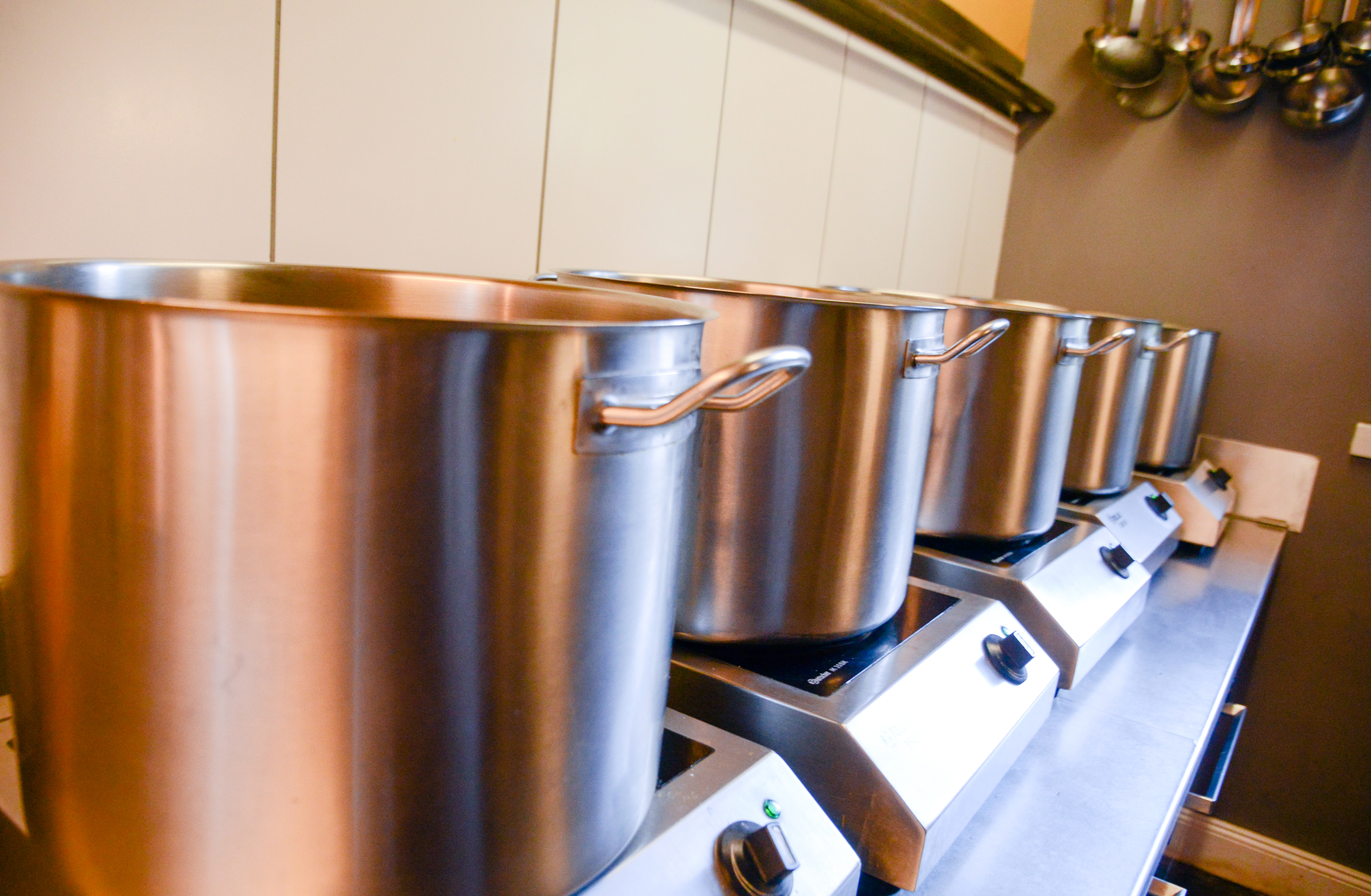
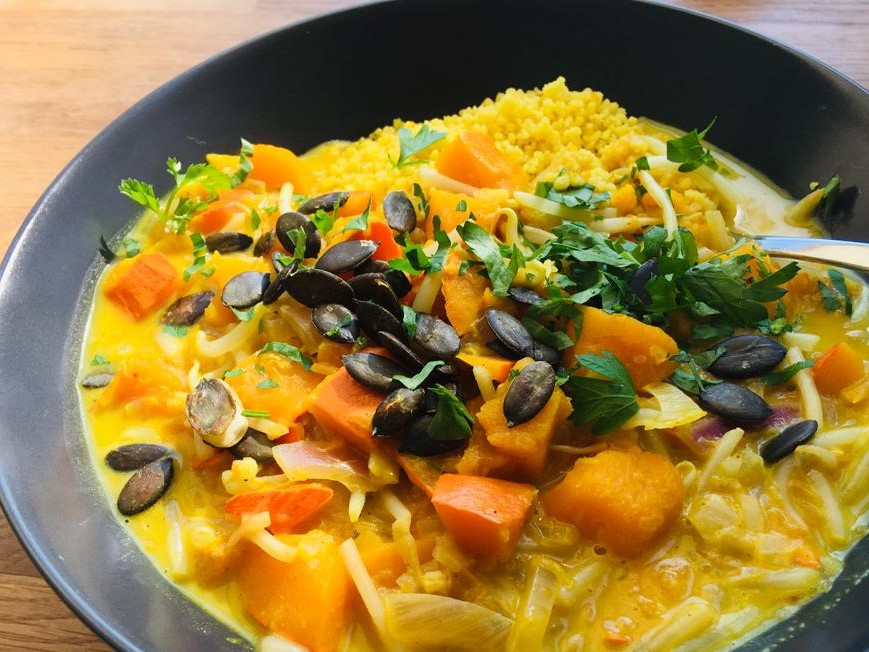
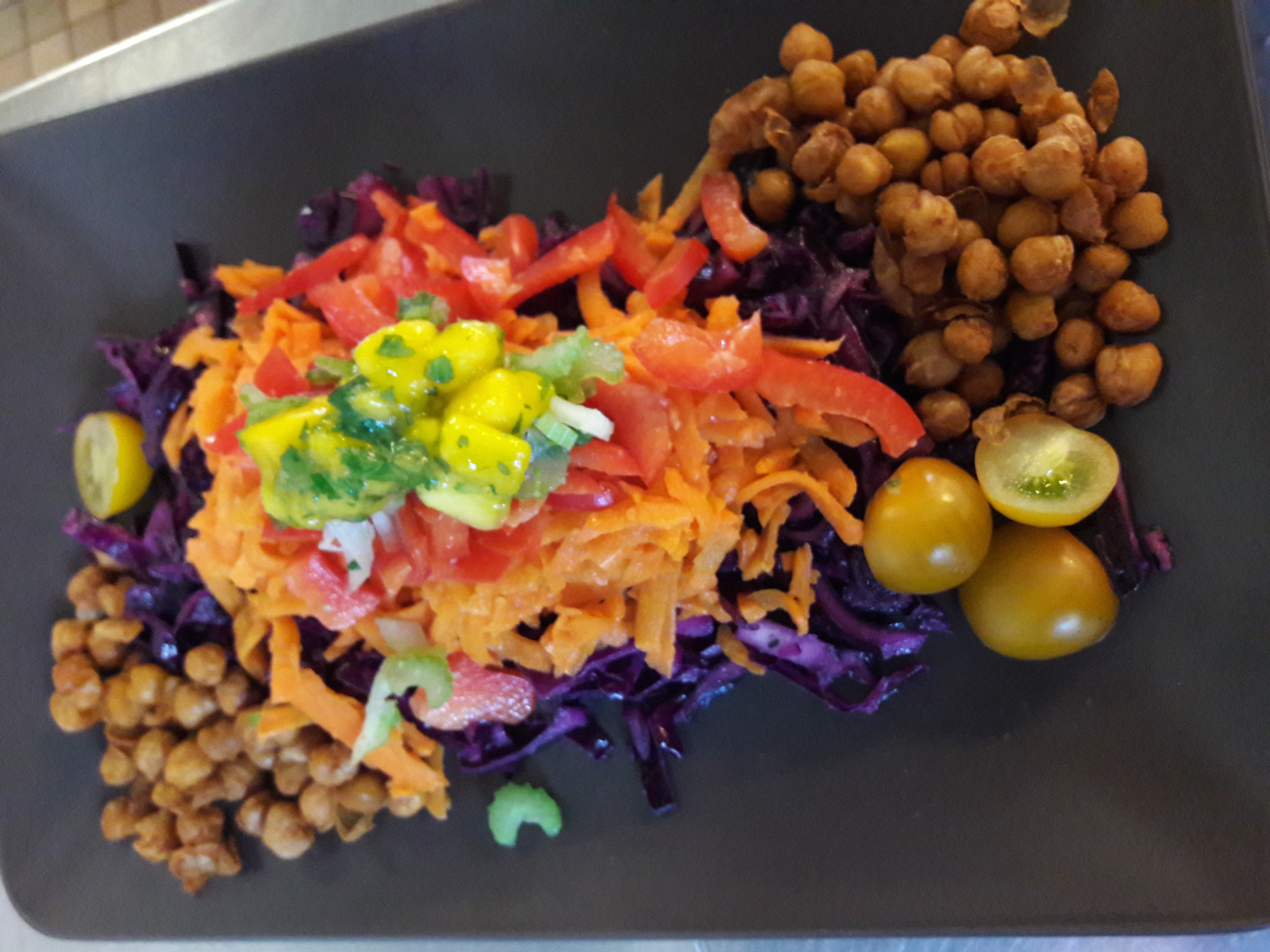
Seit 2013 bietet das Cox in Eutin jeden Tag drei bis vier frische Gerichte, davon immer mindestens eins vegan, vegetarisch, laktosefrei oder glutenfrei, im Mittagstisch von Montag bis Freitag an. Wir haben ein täglich wechselndes Angebot, so dass es auch vorkommt, dass besonders beliebte Gerichte schnell ausverkauft sind.
Sie können gern in unserem Gastraum und bei schönem Wetter auch im Außenbereich Platz nehmen oder Ihr Essen zum Mitnehmen abholen. Gerne befüllen wir dazu auch umweltfreundlich die Ikea-Glasschalen, die Sie beim Hersteller oder bei uns erwerben können.
Wir freuen uns auf Sie!
Energy
Switching to a ‘real’ green electricity provider
0
(0) no special tariff, (1) eco from the conventional provider, (2) eco from the local provider (3) with a pure green electricity provider
(0) no special tariff, (1) eco from the conventional provider, (2) eco from the local provider (3) with a pure green electricity provider
Your country has most likely real green electricity providers, as they purchase or implement the appropriate capacities of green electricity for each customer. The other electricity providers only offer an electricity mix. The share of green electricity is sold more expensively as an eco-tariff to some customers, while the other customers theoretically only receive the shares of gas, coal, etc.
http://www.imodeler.info/ro?key=CF8Gsu47BnYHLi5NHUWXKVA
0.44
Energy-saving devices
0
(0) outdated devices, (1) with old energy-saving seal, (2) with up-to-date and (3) with the latest best value
(0) outdated devices, (1) with old energy-saving seal, (2) with up-to-date and (3) with the latest best value
It is always a consideration whether the further use of an older device does not require less energy or water than the production of a new, energy-efficient device. Therefore, the energy requirement along the entire product life cycle (from production to use to disposal) must be considered.
Sometimes someone needs a different device and can't afford a new one - then a used device from someone who has bought a new, more economical device, of course, also makes sense. With some devices, the top values are only achieved with large quantities, i.e. washing machines with a lot of capacity. It is to see whether the top values also apply with lower filling quantities, for example for single households.
0.23
LED lamps
2
(0) for none at all, (1) for older energy-saving lamps, (2) for largely LED, (3) for complete LED lighting
(0) for none at all, (1) for older energy-saving lamps, (2) for largely LED, (3) for complete LED lighting
LED 'light bulbs' are now available for really all lamps, even with pleasantly warm light colors.
0.23
Minimising streaming
3
(0) for streaming of everything (data, television), (1) for a lot of streaming, (2) for rare streaming, (3) for no streaming at all
(0) for streaming of everything (data, television), (1) for a lot of streaming, (2) for rare streaming, (3) for no streaming at all
Streaming can hardly be stopped. It is convenient if all data is automatically backed up in the cloud and can be accessed from anywhere, and it is equally convenient if all shipments can be viewed not only at a certain time, but 'on demand'. It can also be argued that computers no longer need such large hard drives and CDs or BlueRays no longer need to be produced.
In the end, however, streaming all over the world means a considerable energy demand and the infrastructures for transmission towers devour space and raw materials and they probably also cause harmful radiation. One solution is therefore to give up comfort a bit and perhaps also go more into nature instead of squatting in front of the screen. In detail, there is still the possibility to download something more at home with fiber optic, than on the go with older mobile networks.
0.39
PV on suitable places
0
(0) not at all, (1) less than 50%, (2) more than 50%, (3) all suitable areas
(0) not at all, (1) less than 50%, (2) more than 50%, (3) all suitable areas
We have to use all suitable areas for photovoltaics (PV), as the variants on open spaces restrict nature and agriculture. A trend is PV on stilts, so that it can still be gardened or cultivated underneath. But that costs building material. Photovoltaics has become amazingly inexpensive today thanks to cheap panels from China. Unfortunately, there is hardly any money to make from the feed into the power grid, currently about 8 cents per kWh in Germany. Therefore, PV should always be combined with its own electricity storage (own step, see below) so that as much electricity as possible is consumed by yourself. This then saves approx. 25 to 35 cents per kWh (depending on your tariff), which we would otherwise have to pay to the electricity provider. In this way, your own PV system, adapted to your own electricity consumption, pays off after just a few years. If you have a car, you should take into account its consumption (even if it is not yet an electric car). Then the savings are much bigger. The banks like to give loans for PV, quite often it is also being subsidized. In addition, there are also providers who take over the costs and virtually rent the roof area and offer discounted electricity in return. Such providers then form so-called virtual power plants with other houses and their batteries. For such a dependency, you should inform yourself well about what is best for you.
1.10
Wind power / hydropower
0
(0) not at all, (1) less than 50%, (2) more than 50%, (3) all suitable areas or options
(0) not at all, (1) less than 50%, (2) more than 50%, (3) all suitable areas or options
First of all: private use of hydropower is possible, but absolutely the exception and must be well considered legally and in its effects on ecosystems.
We can also only operate wind power plants with consideration for our neighbors (noise development). Some properties are actually sufficiently exposed to the wind. But many are later disappointed with how little yield they have then.
Citizen energy really makes sense - if, for example, residents join together in a cooperative and usually operate larger wind turbines nearby. This promotes the acceptance of wind power in the area and the return does not end up with the large investor, but with the local people.
0.88
Energy storage
0
(0) not at all, (1) a small storage for one day, (2) a storage for more than one day, (3) a storage also for e-car charging or as a virtual power plant
(0) not at all, (1) a small storage for one day, (2) a storage for more than one day, (3) a storage also for e-car charging or as a virtual power plant
An electricity storage system primarily helps to maximize the yield of the PV system if the electricity is not fed into the grid for little money, but comes out of the battery in the evening and then allows the full electricity price to be saved.
Another advantage may be that some batteries work as an island system in the event of a power outage.
The already mentioned virtual power plants then access your battery from the outside and make the electricity available virtually in the neighborhood and compensate you for it. In addition, power grids are stabilized and even with little wind and no sun, we can consume renewable energies.
Note on lithium: Like many other raw materials, lithium is often problematic during mining. However, the life cycle assessment must take into account that we can recycle lithium for hundreds of years. In the basement, older lithium batteries from the automotive industry could also come to a second life later or, alternatively, sodium batteries that require more space.
0.66
Motion detector
1
(0) none, (1) less than half, (2) more than half, (3) everywhere
(0) none, (1) less than half, (2) more than half, (3) everywhere
Motion detectors make sense in all rooms including outdoor areas, where we potentially let the light burn for too long, for example in the hallway, basement, garage, etc. Of course, it is important that the light does not stay on for too long.
0.16
Avoidance of stand-by times
3
(0) not at all, (1) for some devices, (2) for most, (3) for all
(0) not at all, (1) for some devices, (2) for most, (3) for all
Standby power consumption is often reminded and extrapolated. For example, if a TV consumes 5 watts in standby, that is 120 watt hours (Wh) per day, i.e. about one eighth of a kilowatt hour, which costs about 35 cents. So hardly anyone will get up from the sofa for 5 cents a day and press the switch on the TV, or turn off the WLAN router at night, or shut down the computer. Or is it? And how many watt hours could be saved daily in all households? Would this consideration influence your actions?
0.16
Let the light burn unnecessarily
2
(0) happens constantly, (1) happens frequently, (2) happens rarely, (3) never happens
(0) happens constantly, (1) happens frequently, (2) happens rarely, (3) never happens
Modern lamps require little electricity, and yet it is worthwhile not to let them burn unnecessarily, for example when we are not in the room for a long time.
0.08
Renunciation of extreme power consumers
2
(0) have many, (1) have more than two, (2) have one, two (3) have no
(0) have many, (1) have more than two, (2) have one, two (3) have no
Apart from the fact that every device can have a high power consumption, a refrigerator is not regularly defrosted, the door seal is leaking, the washing machine is driven with too high temperatures and spin numbers, etc., there are still some unnecessary things that consume a lot of electricity:
Tumble dryer, sauna, dehumidifier, pond pumps, aquarium heaters, terrace heaters, etc.
The easiest way is to see to what extent you deviate from the average consumption in Germany and then think about what it is. If you are charging an electric car at home, you should see what can be attributed to it (either the car offers this evaluation or you use a separate electricity meter for this).
0.39
Housing, Buildings
Moderate living space
2
(0) huge ones (1) normal ones (2) smaller ones (3) shared ones
(0) huge ones (1) normal ones (2) smaller ones (3) shared ones
The area that we need to live means the area that is sealed, the building material that is needed, and the space that needs to be heated - and all this against the background of social justice. If you offer an apartment, a holiday house, or a hotel room and additional rooms smaller versions can be a smart choice.
2.11
Insulation
0
(0) more 140kWh/m2a, (1) down to 70, (2) to 15, and (3) for less than 15 kWh/m2a
(0) more 140kWh/m2a, (1) down to 70, (2) to 15, and (3) for less than 15 kWh/m2a
Thermal insulation is extremely important. Investing here means saving energy and costs. The argument that building will then become too expensive must be clearly put into perspective. One way, of course, is to have to insulate smaller living spaces. The other to become generally more efficient when building. Then ecological building materials will also become affordable. Old houses that can no longer be sensibly insulated are perhaps worth so much more as a new building that financing is not a problem. (Note: the figures are for Germany)
1.17
Heat pump or network with renewable energies
0
(0) oil or gas, (1) hybrid heat pumps, (2) air-water WP, (3) brine or similar WP
(0) oil or gas, (1) hybrid heat pumps, (2) air-water WP, (3) brine or similar WP
Heat pumps extract a large volume - air, soil, groundwater - small amounts of heat and add them to sufficient heat for the apartment and water heating. Similar to a refrigerator, only a refrigerant is pumped in a circle and the electrical energy is much lower than the heat energy obtained.
Heat pumps in themselves are not necessarily expensive. But electricity is wrongly expensive compared to natural gas, which is why heat pumps are only worthwhile if less heat is needed overall in a well-insulated house. In cold Scandinavia of all places, heat pumps have long since prevailed, while a sham debate is being held in Germany.
Wood heaters are at best one (1), as they are less bad than oil and gas. However, they emit ultrafine particles and we need wood for building materials. Windbreak can remain in the forest for biodiversity or be used for chipboard.
2.60
Saving water (devices)
2
(0) outdated devices, (1) with poor consumption value, (2) with recently current and (3) with the latest best value
(0) outdated devices, (1) with poor consumption value, (2) with recently current and (3) with the latest best value
Appliances such as washing machines and dishwashers must specify a value for water consumption when buying new. It is therefore worthwhile to compare water and energy consumption equally and also to research corresponding test reports, for example from Öko-Test or Stiftung Warentest.
0.35
Waiver of air conditioning
3
(0) not at all, (1) less than 50%, (2) more than 50%, (3) 100% of the rooms
(0) not at all, (1) less than 50%, (2) more than 50%, (3) 100% of the rooms
Air conditioning systems are also gaining in importance in temperate latitudes. Intelligent construction and ventilation and the use of thermal protection roller blinds can avoid these power guzzlers.
In warm regions, a corresponding education of the guests can take place. Often a fan is also useful.
0.39
Nutrition
Vegan alternatives
3
(0) not at all, (1) to many meals, (2) to all meals, (3) more than one alternative
(0) not at all, (1) to many meals, (2) to all meals, (3) more than one alternative
Vegan means refraining from fish, meat, milk, cheese and other animal foods. Unthinkable for many people, on the one hand because of the taste, and on the other hand because they consider it unhealthy.
To the taste, it can be said: Among the extremely diverse vegan alternatives, something certainly tastes just as good or even better. We just have to try it - from vegan cheese to egg salad to burgers. Many celebrities and athletes are vegan. Vegan is booming.
Regarding health, it must be said: Our early ancestors eat healthier than we eat today. There was mixed food with only little meat and fish and also little grain and instead more legumes. If you eat a vegan diet, you have to pay attention to two nutrients: vitamin B12 and unsaturated omega 3 fatty acids. B12 can be bought for sucking (or as an additive in foods that are no longer called organic). Omega 3 fatty acids are available in linseed and algae oil. After a few months vegan, a blood test can show whether there are deficiency symptoms. As a rule, vegans eat healthier and are fitter than others.
What else does it bring: In addition to ethical reasons (keeping and killing animals), vegans help to prevent the deforestation of forests, because most areas in the world need the feed. In fact, we will not be able to feed the growing world population in the way we Germans. Vegans also prevent greenhouse gases from the methane emissions of cows, save enormous amounts of drinking water and prevent the pollution of soils, groundwater and waters.
Hotels, pensions, restaurants should offer vegan alternatives, also like to inform about the advantages and find out in dialogue with the guests what is well received and what is not. A real paternalism will not work - rather the feeling of pride, at least partly doing something better.
4.44
Vegetarian alternatives
3
(0) not at all, (1) to many meals, (2) to all meals, (3) more than one alternative
(0) not at all, (1) to many meals, (2) to all meals, (3) more than one alternative
Unlike the vegan diet, a vegetarian diet can also include milk, cheese or eggs. Vegetarian days are healthy, mean less animal husbandry and thus less consumption of land and water.
We Germans consume more than three times more animal products, which according to the EAT-Lancet Commission would be healthy for us and the planet.
Hotels, pensions, restaurants should offer vegan alternatives, also like to inform about the advantages and find out in dialogue with the guests what is well received and what is not. A real paternalism will not work - rather the feeling of pride, at least partly doing something better. We don't have to become vegans or vegetarians right away, but maybe just flexitarians.
3.01
Food from the region
2
(0) not at all, (1) less than 50%, (2) more than 50%, (3) 100% of food
(0) not at all, (1) less than 50%, (2) more than 50%, (3) 100% of food
Food from the region, from the weekly market and from the farm shop have not been transported far (there are of course also exceptions there) and strengthen the local economy.
However, there are also inefficient short transport routes when vehicles with little load drive to the points of sale. E-mobility and cargo bikes can help here.
Unfortunately, the regional is often also played out against the organic offer: regional, sprayed with pesticides food is not as good as regional organic food, and regional meat is not as good for the environment as the renunciation of meat.
0.23
Organic food
1
(0) not at all, (1) less than 50%, (2) more than 50%, (3) 100% of the products also available as organic
(0) not at all, (1) less than 50%, (2) more than 50%, (3) 100% of the products also available as organic
Organic is extremely important for biodiversity. We have the greatest species extinction since the extinction of the dinosaurs and the consequences are greater than those of climate change. Pesticides and mineral fertilizers endanger our future. In addition, soils from organic farming usually store more carbon and thus help against the climate catastrophe.
The counter-argument is often that the yields in organic farming are lower than in industrial agriculture and therefore more forests have to be cut down. This is true, for example, with cereals that are not unrestrictedly healthy. But if we eat less meat, waste less food and eat more healthy legumes, we have plenty of additional space available and can feed the entire world organically and even plant a little more forest.
Organic is more expensive. But on the one hand, many costs can be saved by less meat and on the other hand, it can be bought and cooked intelligently …. of course, it is also to be questioned whether there must be such a low livelihood at all - environmental policy is also social policy.
1.61
Organic from the region
0
(0) not at all, (1) less than 50%, (2) more than 50%, (3) 100% of the products also available as organic from the region
(0) not at all, (1) less than 50%, (2) more than 50%, (3) 100% of the products also available as organic from the region
Which is better - the organic apple from New Zealand or the sprayed apple from the region? Answer: both wrong. Organic food from the region means less transport and is therefore even better than organic food with wide transport.
2.00
Organic from the region seasonal
0
(0) not at all, (1) less than 50%, (2) more than 50%, (3) 100% of the seasonal products also available as organic
(0) not at all, (1) less than 50%, (2) more than 50%, (3) 100% of the seasonal products also available as organic
Seasonal organic products in addition to regional organic products also have less energy expenditure for storage.
In the respective months, other products are available seasonally, so that we can eat healthy and tasty all year round with little transport and storage effort with regard to a seasonal calendar.
2.16
Legumes
1
(0) not at all, (1) less than 50%, (2) more than 50%, (3) 100% of the otherwise mostly cereal products
(0) not at all, (1) less than 50%, (2) more than 50%, (3) 100% of the otherwise mostly cereal products
Legumes are not only an alternative source of vegetable proter to animal products, but also extremely important for world nutrition. They bind nitrogen from the air in the soil and can achieve just as high yields in organic farming as in industrial agriculture. So we have to cut down fewer forests.
In addition, legumes are healthier than cereals. Harari describes in Sapiens how we could probably get much older if we didn't eat so much cereal products.
After all, legumes are important for bees and biodiversity. Lupine, for example, also grows in northern Germany and can be used for meat substitutes, yogurt, coffee substitutes, ice cream or even noodles.
0.42
Tap water
1
(0) not at all, (1) less than 50%, (2) more than 50%, (3) 100% instead of purchased mineral water or soft drinks
(0) not at all, (1) less than 50%, (2) more than 50%, (3) 100% instead of purchased mineral water or soft drinks
Fortunately, tap water has long been a trend. There are drinking water dispensers in schools and the students have their drinking bottles with them, and managers also bring their drinking bottles to workshops. Many children do not even get used to the unhealthy sugar drinks.
Tap water is more strictly controlled than bottled drinks and saves a lot of energy and packaging.
Even with motorhomes or boats or in places with the smell of chlorine in the water, we can save a lot of money, energy and packaging through good and regularly exchanged filters.
1.30
Avoidance of food waste
3
(0) not at all, (1) less than 50%, (2) more than 50%, (3) I save or avoid 100% of the food to be thrown away
(0) not at all, (1) less than 50%, (2) more than 50%, (3) I save or avoid 100% of the food to be thrown away
Food is wasted from the field to the factories and transport routes to the throw away by us, the restaurants and the supermarkets. This ultimately means that more areas are needed for cultivation and thus forests are cut down and biodiversity is endangered with sprays and fertilizers.
We can shop more specifically, throw away goods not only because of the best before date, save food in the household (e.g. freeze bananas or make durable spreads and soups from leftover vegetables yourself), save specifically rescued food (e.g. too small or wrinkled goods) and also donate leftover food in many places, e.g. to the food banks.
0.83
Garbage
Buy unpacked or refills
1
(0) never, (1) sometimes, (2) mostly, (3) always
(0) never, (1) sometimes, (2) mostly, (3) always
We are used to the fact that everything is packed and we don't care much about the packaging. For some foods, the packaging is more expensive in the production than the content. Paying attention to the packaging sends a signal to manufacturers and retailers. Refills are an option as well.
For food, there are so-called unpackaged shops or at least the possibility of using deposit containers (own step) or cotton bags brought along for loose vegetables and fruit.
In basically all markets, we should have our own bags with us.
0.65
Separate garbage consistently
3
(0) not at all, (1) some, (2) mostly, (3) always
(0) not at all, (1) some, (2) mostly, (3) always
Consistently separating waste, including green waste, glass and paper, is not as self-evident as can be assumed. Many make little effort here and don't really know what belongs in which bin. The residual waste bin also costs the public sector a lot of money, while the recyclable and green waste bin are free of charge. But also special waste, such as batteries, incandescent lamps, electrical appliances, etc. must be disposed of properly.
Hospitality businesses and events can place separating waste bins with information signs everywhere. In general, it is also possible that a sign indicates that the cleaners take over the separation for the guests. But better, the guests can do that.
0.65
Paperless office/media
3
(0) not at all, (1) some, (2) most, (3) all only digital.
(0) not at all, (1) some, (2) most, (3) all only digital.
Saving paper helps to protect forests - recycling paper also ultimately means more demand for fresh pulp from trees.
We don't even need to print many things in the first place, but can save them on devices that we already have. For internal processes but also for dialogue with customers, digital forms should continue to prevail. So the guests are welcome to ask if they need a paper version of the invoice.
0.61
Reusable
1
(0) not at all, (1) some, (2) mostly, (3) always
(0) not at all, (1) some, (2) mostly, (3) always
After unpacked and for drinks after the tap water, the best thing we can do is to buy our food in reusable containers. (By the way, there are also reusable shipping boxes for office supplies as well as some regional delivery services). Also ask whether the containers are transported empty throughout Germany, or whether North German beer flows into the empty bottle of Bavarian beer and vice versa. Next question, what energy does it cost to clean the containers. Composite packaging or cans that are easy to recycle are the better alternative in some studies. In such studies, it is necessary to look closely at what is being compared. Ultimately, it is important to close regional cycles.
Next question, whether the containers should be made of glass or plastic - glass is recycled more often, plastic is lighter and means less energy during transport.
0.81